31-day returns policy Free delivery & returns More than 95,000 unique rugs Since 1998: Your expert in hand-knotted oriental rugs

Summer Sale – 10% Extra Off
Discover our extensive selection of hand-knotted and handwoven rugs and enjoy an extra 10% off everything.
Discount code: SUMMER10

Uniq Rugs

Kitchen Rug: How to Find the Perfect Rug for Your Kitchen

BY LAURA, RUG EXPERT AT UniqRugs | PUBLISHED: 2026-07-06 | 9 MIN READ

A kitchen rug is often underestimated. Yet it can do more than enhance the look of a kitchen—it can also improve comfort, protect the floor, and visually define different areas. Especially in open-concept kitchens, a rug helps create a warm, inviting atmosphere.

However, not every rug is suitable for the kitchen. Material, size, shape, and placement all play a crucial role in ensuring the rug meets everyday demands and stays beautiful for a long time.

In this guide, you’ll learn what to look for when choosing a kitchen rug. We’ll show you which materials are especially well suited, which size and shape work best for your kitchen, where a rug should ideally be placed, and which styles are a good fit for different kitchen designs.

Do You Even Need a Kitchen Rug?

Whether a kitchen rug makes sense depends mainly on the layout of the room and how the kitchen is used. In many cases, it helps visually define individual areas and makes the space feel more inviting. Especially in open-concept kitchens, a rug creates a seamless transition between the cooking, dining, and living areas.

Placement also plays an important role. In front of the kitchen cabinets or the sink, a rug can highlight the work area, while under a dining table it creates a clearly defined dining zone. This makes the entire kitchen look more structured and organized.
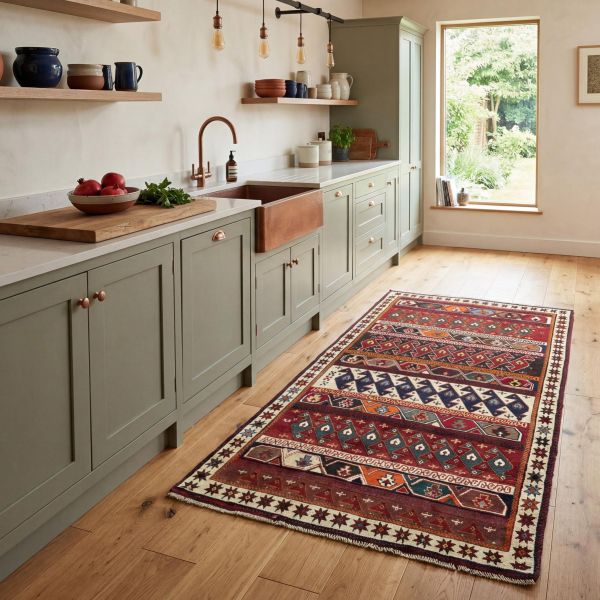
Oriental runner rug with a floral pattern as a stylish accent in an open-concept eat-in kitchen

Kitchen Runner or Kitchen Rug – Which Is the Better Choice?

Whether a kitchen runner or a classic rug is the better choice depends primarily on the room layout. While narrow kitchens often benefit from a runner, a larger rug is especially well suited for open-concept kitchens or dining areas. The key is that the rug complements the space in a practical way and does not restrict foot traffic.

Kitchen Runner Kitchen Rug
Ideal for narrow galley kitchens Perfect for open-concept kitchens
Highlights walkways and work areas Defines larger spaces
Works well in front of the sink or countertop Ideal under dining tables or kitchen islands
Requires little space Creates a cozy atmosphere
Easy to replace and flexible to use Looks especially harmonious in spacious kitchens

In long kitchens, a runner often creates a balanced overall look because it follows the work area without making the space appear smaller. In larger kitchens or open-concept living spaces, a rug, on the other hand, connects different areas and creates clear zones for cooking, dining, and living.

Tip: Don’t base your choice only on the size of the kitchen, but also on its layout. A suitable rug should not limit freedom of movement and should leave enough space around cabinet doors and walkways.
What rug size is right for my kitchen?

The right rug size depends primarily on your kitchen’s layout and how you use the space. A rug should complement the work area without blocking cabinet doors, drawers, or walkways. Depending on the kitchen layout, different sizes and placements may work best.
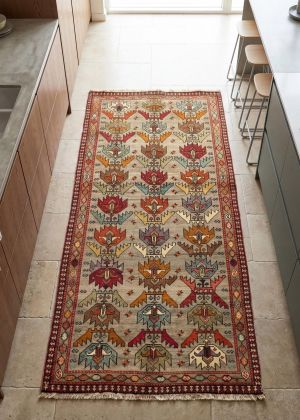
Oriental runner rug in a narrow, modern kitchen.

Narrow kitchen runner

For single-wall kitchens, a runner is usually the best choice. It follows the workspace along the kitchen line and adds more comfort while cooking without making the room look smaller. Depending on the length of the kitchen, models between 60 × 180 cm and 80 × 250 cm are suitable.
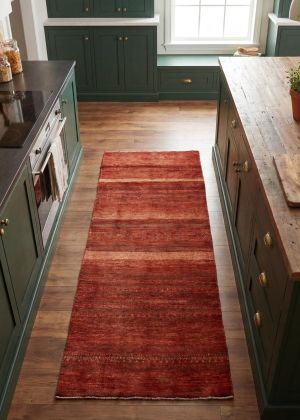
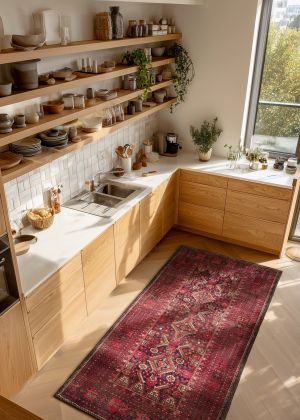
Traditional red runner rug in a kitchen.

L-shaped kitchen

In an L-shaped kitchen, a single runner or two smaller rugs can be a practical choice. This highlights the main work areas in front of the sink and countertop while maintaining plenty of room to move around.
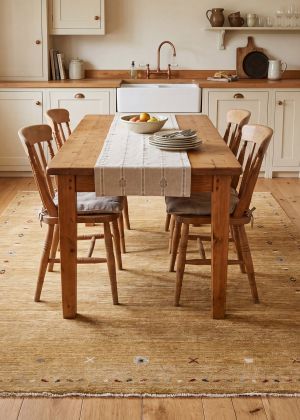
Rug under the dining table in a modern country kitchen.

U-shaped kitchen

For U-shaped kitchens, a rectangular rug is often a great choice because it visually ties the central work area together. It’s important to leave enough space from cabinet doors and appliances so every area can be used without any issues.
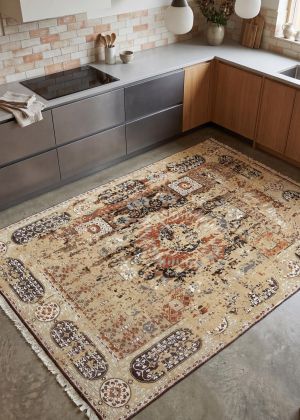
Elegant rug in a spacious open kitchen.

Open-concept kitchen and living area

In open-concept kitchens and living areas, a larger rug works well to visually define the dining area or kitchen island from the living space. At the same time, it creates a harmonious transition between the different zones of the home.

Which material is best suited?

The choice of material affects not only the look of a kitchen rug, but also its durability, care requirements, and everyday practicality. Especially in the kitchen, a rug should be hard-wearing and able to withstand daily wear and tear with ease.

Virgin wool

Virgin wool is one of the most popular materials for high-quality rugs. This natural fiber is durable, long-lasting, and naturally dirt-resistant. At the same time, it provides a comfortable feel underfoot and helps create a balanced indoor climate.

Cotton

Cotton rugs are lightweight, flexible, and especially well suited for smaller kitchens or areas where the rug needs to be moved or cleaned regularly. They have an easygoing look and fit well in modern and Scandinavian-style kitchens.

Natural Silk

Rugs made of natural silk or with silk content stand out for their subtle sheen and elegant look. However, they are less suitable for heavily used kitchens. They work better in open-concept kitchens or dining areas, where they are exposed to less wear and tear.
Kitchen Layout Recommended Rug Size Recommendation
Narrow Galley Kitchen 60 × 180 cm to 80 × 250 cm A kitchen runner along the countertop adds comfort and helps protect the floor.
L-Shaped Kitchen 80 × 200 cm to 160 × 230 cm Depending on the available space, a runner or rectangular rug works well to visually connect the work areas.
U-Shaped Kitchen 120 × 180 cm to 200 × 300 cm A rectangular rug in the center creates a balanced overall look and ties the kitchen areas together.
Open-Concept Kitchen 160 × 230 cm to 250 × 350 cm A larger rug visually separates the dining or kitchen area from the living space.
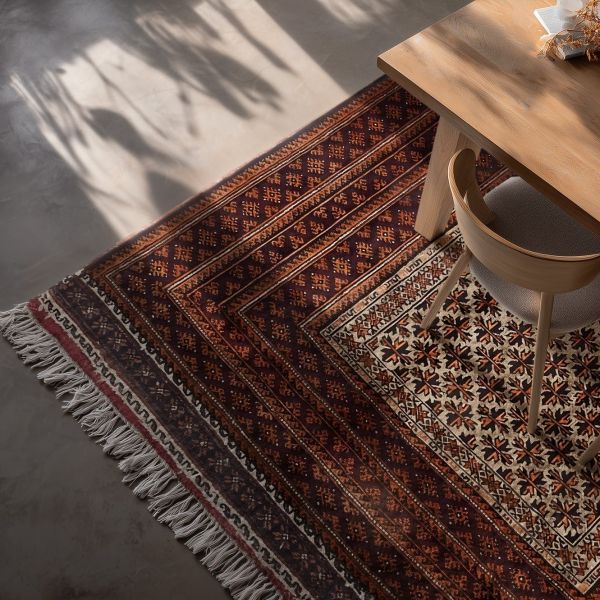
Medium-wide overhead shot of a traditional rug in rich red tones in a dining room

Which material is the best choice?

For most kitchens, virgin wool is the best choice. It combines durability with a high level of comfort and works well in both classic and modern interiors. Cotton is a great option when you need a lightweight, flexible rug, while natural silk really shines in elegant eat-in kitchens.

Tip: Regardless of the material, it’s a good idea to vacuum the rug regularly and remove stains as quickly as possible. That way, it will stay beautiful for a long time, even with daily use.
Which rugs are especially well suited for the kitchen?

Not every rug is equally suited for every kitchen. In addition to material and size, the design, texture, and how the space is used also play an important role. Depending on your interior style, different types of rugs may be a better fit.
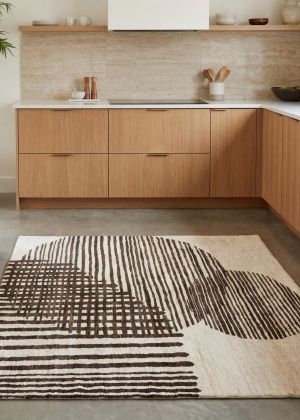
Beige and brown modern Berber rug in a clean, minimalist kitchen.

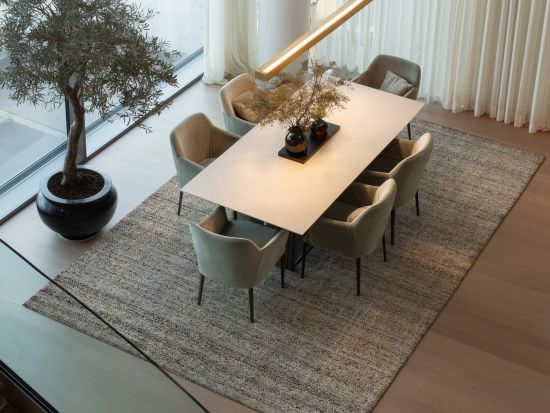
Berber Rugs

Berber rugs stand out for their simple look and natural appeal. They pair especially well with Scandinavian, minimalist, or modern kitchens.
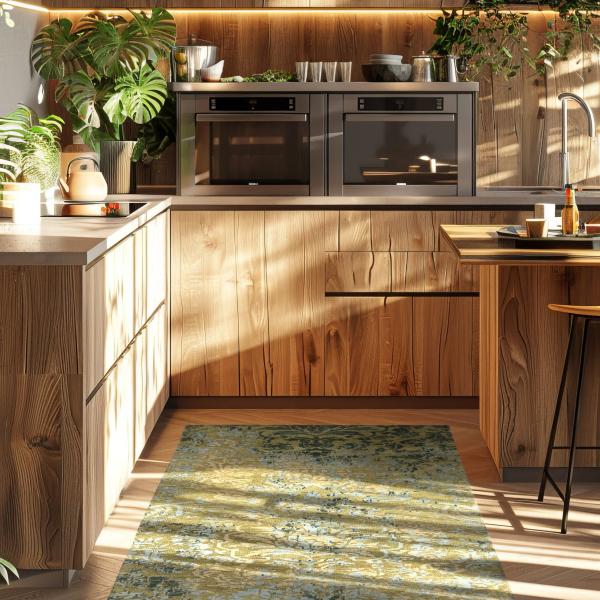
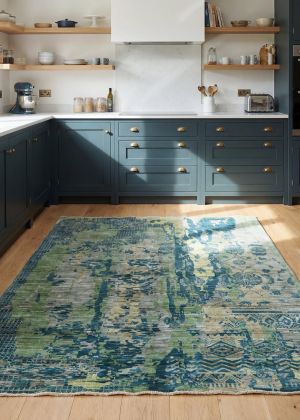
Green designer rug in a contemporary kitchen.

Designer Rugs

Anyone looking to furnish a modern kitchen will find stylish options with subtle colors and clean designs in Texura designer rugs or Mila designer rugs. They blend harmoniously into contemporary interior styles.
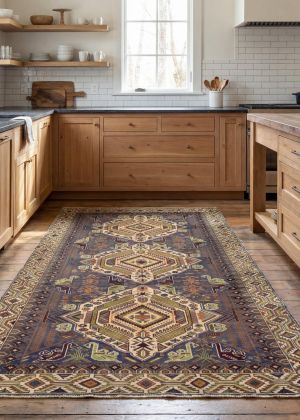
Traditional nomadic rug in a rustic country kitchen.

Nomadic Rugs

Nomadic rugs are characterized by their durable craftsmanship, high-quality virgin wool, and bold geometric patterns. Originally hand-knotted by nomads for everyday use, they are especially hard-wearing. They are an excellent choice for kitchens that should feel natural and full of character, and they add a distinctive touch, especially in modern or rustic interiors.
Modern red Gabbeh runner rug in a narrow kitchen.

Gabbeh Rugs

Gabbeh rugs combine traditional craftsmanship with a modern, natural design. They are characterized by their soft, dense pile, hand-spun virgin wool, and minimalist patterns inspired by nature and the everyday life of nomadic peoples.

Where should a kitchen rug be placed?

The right placement determines whether a kitchen rug is truly practical for everyday use. It should be placed where it complements the space without blocking cabinet doors, appliances, or walkways.

  • In front of the sink: Here, a rug adds comfort while standing and protects the floor from small water splashes. It is important that the rug can dry regularly.
  • In front of the countertop: Along the work surface, a kitchen runner is especially suitable because it follows the workspace without taking up too much room.
  • Under the dining table: In eat-in kitchens, a rug visually defines the dining area. The rug should be large enough so that even pulled-out chairs remain on it.
  • By the kitchen island: A rug can visually highlight the kitchen island and create a connection to the dining or living area.

Tip: Do not place the rug directly in front of the oven, dishwasher, or refrigerator. This helps prevent doors from catching on the rug or opening only partially.

Care and Cleaning of a Kitchen Rug

A kitchen rug gets a lot of daily wear. Crumbs, dust, and small stains can usually be removed without much trouble if treated early. With the right care, a high-quality rug will stay beautiful for many years.

  • Vacuum regularly: It’s best to remove dust and crumbs once or twice a week so dirt doesn’t settle deep into the fibers.
  • Treat stains immediately: Liquids should be blotted up as quickly as possible with a clean cloth. Avoid rubbing hard, as this can push the stain deeper into the fibers.
  • Do not use harsh cleaning products: Mild cleaners or lukewarm water are enough in many cases. Strong chemicals can damage colors and natural fibers.
  • Rotate the rug regularly: Turning it from time to time helps distribute wear more evenly and slows down signs of use.
  • Professional cleaning: Hand-knotted rugs should be professionally cleaned every few years, depending on use, to preserve their colors and fibers over the long term.

Tip: The faster a stain is treated, the better the chance of removing it completely.

Common Mistakes When Buying a Kitchen Rug

Choosing a kitchen rug may seem straightforward at first glance. In practice, however, a few common mistakes can lead to a rug that is not the best fit for the kitchen or that makes everyday life unnecessarily difficult.

Choosing the Wrong Size

A rug that is too small can quickly get lost in the room and only partially fulfill its design purpose. At the same time, a rug that is too large can obstruct walkways or make it harder to open cabinet doors. That’s why you should always match the size to your kitchen’s layout.

Focus only on the design

An attractive pattern alone does not make a good kitchen rug. Material, pile height, and durability are at least just as important so that the rug can withstand daily wear and tear over the long term.

Place the rug in an unfavorable spot

If the rug is placed directly in front of the oven, dishwasher, or refrigerator, the doors may only open partially. Be sure to allow enough clearance from all moving elements.

Choosing a pile height that is too high

High-pile rugs feel comfortable underfoot, but they collect crumbs more quickly and make it harder to move chairs. For most kitchens, flatwoven or low-pile rugs are therefore a better choice.

Underestimating care

Even a high-quality rug needs regular care. Removing dust and crumbs frequently and treating stains as quickly as possible helps preserve the rug’s appearance and extend its lifespan significantly.

Frequently Asked Questions About Kitchen Rugs

Can I use a kitchen rug on heated floors?

Yes. Most hand-knotted rugs made from natural materials are well suited for rooms with radiant floor heating. However, make sure the rug does not completely block the heat and that the manufacturer's instructions are followed.

Is a non-slip rug pad worth it?

Especially on tile or smooth floors, a non-slip rug pad is recommended. It increases safety, prevents the rug from slipping, and also protects the floor.

Which rug color is especially easy to maintain in the kitchen?

Medium-light natural tones as well as patterned rugs are often more practical for everyday use than pure white or very dark styles. Small crumbs or light dirt are less noticeable on them.

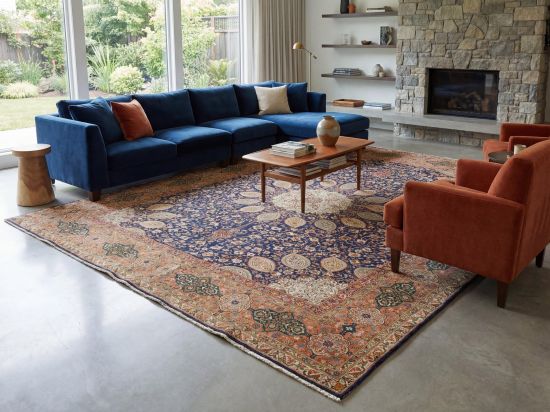
Can I use an oriental rug in the kitchen?

Yes. High-quality oriental rugs made of virgin wool are durable and long-lasting. The key is that the rug fits the size of the kitchen and is cared for regularly.

How long does a high-quality kitchen rug last?

With proper care, a hand-knotted rug can last for many decades. High-quality materials and traditional craftsmanship ensure that the rug retains its beauty for a long time, even with daily use.
Find the right kitchen rug

Whether it’s a narrow kitchen runner, a modern designer rug, or a hand-knotted oriental rug, the right choice depends on your kitchen, your interior style, and your personal needs. Explore our wide selection of high-quality rugs and find the one that perfectly combines functionality, comfort, and timeless design.
More Inspiration

Hand-knotted Persian rug in vibrant shades of red in the bathroom.
Stunning design in the bathroom

Bathroom rugs

Ideas for Living Room Rugs – Inspiration for a Cozy Home

Ideas for Living Room Rugs – Inspiration for a Cozy Home

Colorful children's room with a vibrant patchwork play rug
Things to pay attention to

Rugs for the children's room