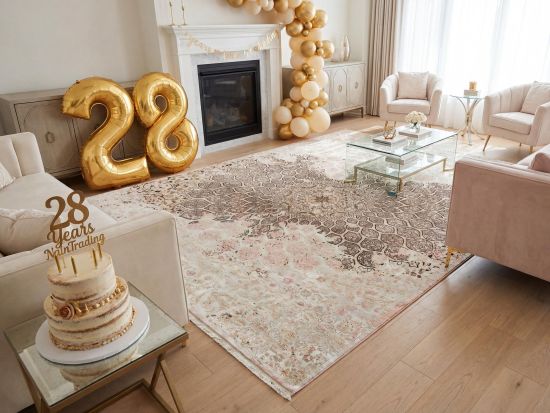
Anniversary Sale
Save up to 20% – even on already discounted rugs!
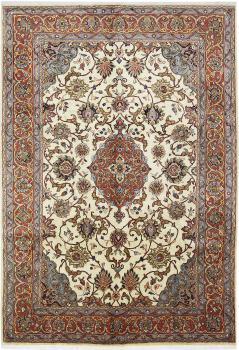
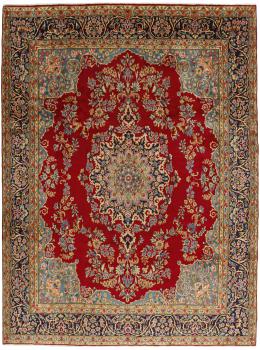
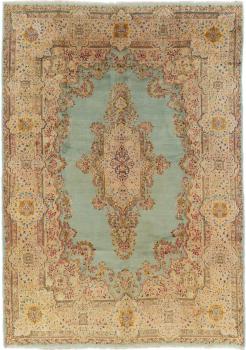
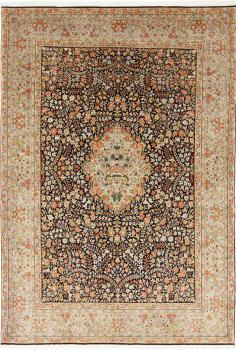
Persian Rugs are among the most poetic expressions of Oriental craftsmanship. For centuries, carpets have been created in the vast landscapes of Persia that not only adorn living spaces but also carry stories, traditions, and the identity of entire regions. Each provenance has its own signature—shaped by climate and culture, by the experience of the weavers, and by an aesthetic refined over generations. Thus, Persia became a mosaic of distinctive carpet landscapes where delicate artistry meets centuries-old symbolism.
In this article, we present eleven of the most significant Persian carpet provenances—Nain, Tabriz, Isfahan, Ghom, Keshan, Mashhad, Bidjar, Moud, Sarough, Kerman, and Kashmar. Each of these regions represents a characteristic style: from silky elegance to monumental medallions, from narrative scenes to strictly rhythmic allover patterns, from soft color nuances to vibrant contrasts. Together, they showcase the impressive diversity for which classic Persian rugs are valued worldwide.
To clearly highlight the particularities, all provenances are presented in a uniform, comparable feature grid—providing information on origin, cultural classification, typical formats, materials, color palettes, design structure, pattern categories, as well as technical characteristics such as pile height, knot type, and knot density. This creates an inspiring overview that offers both beginners and connoisseurs a deeper access to the world of Persian carpets.
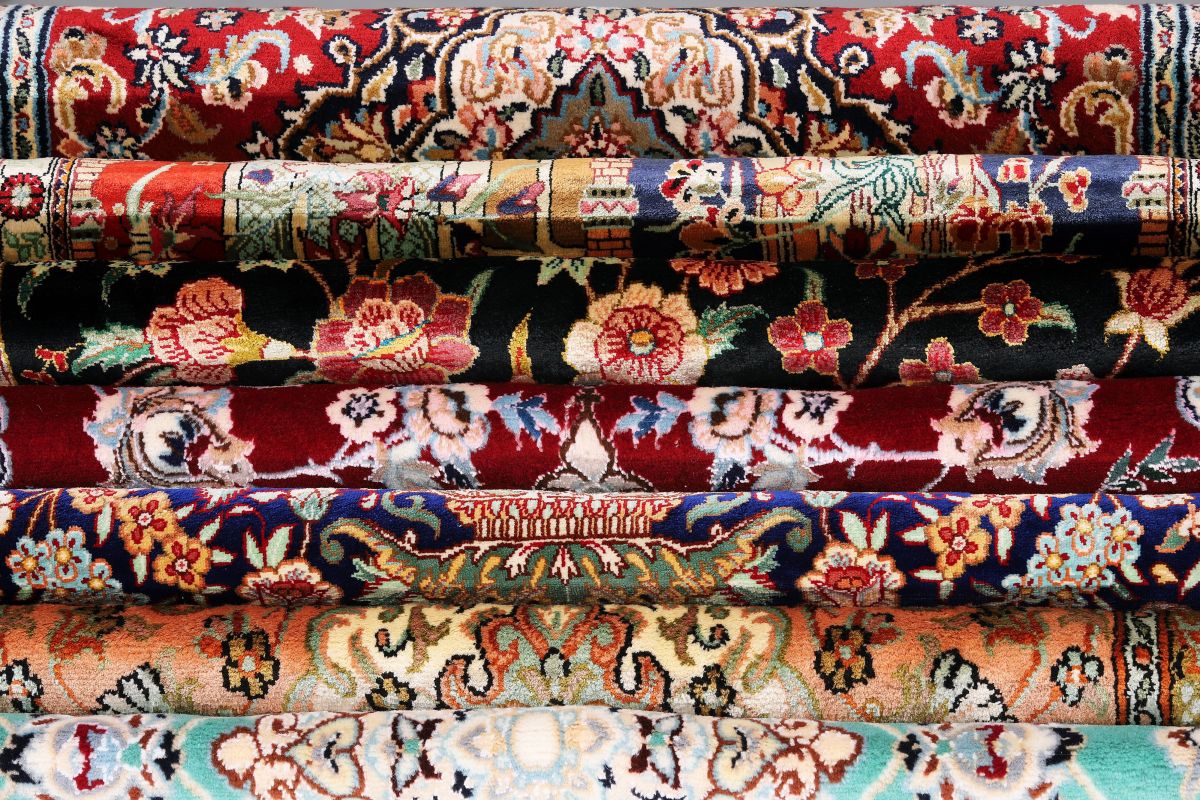
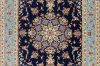
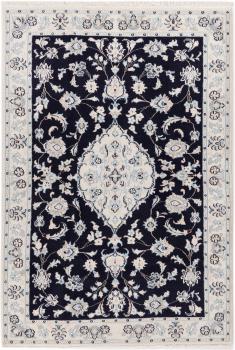
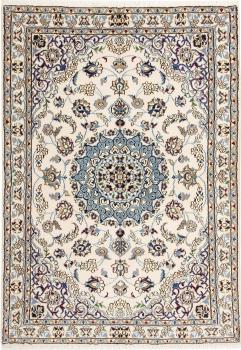
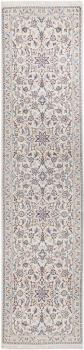
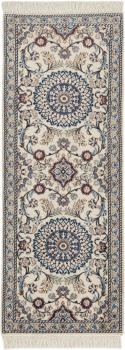
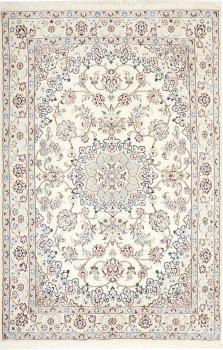
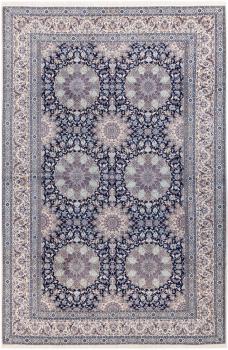
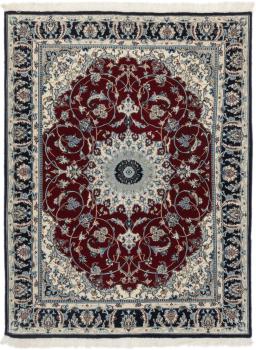
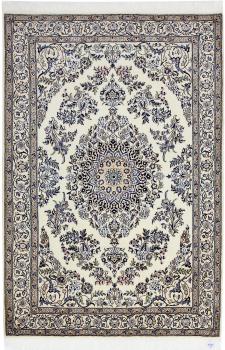
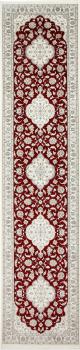
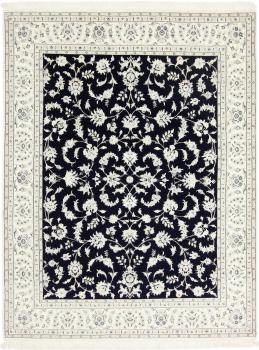
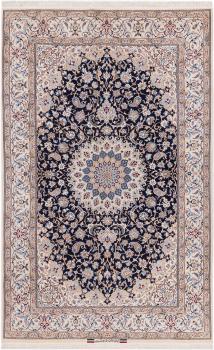
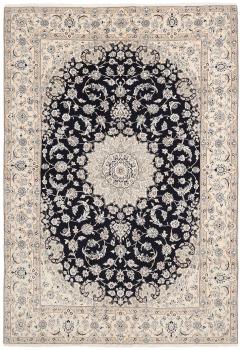
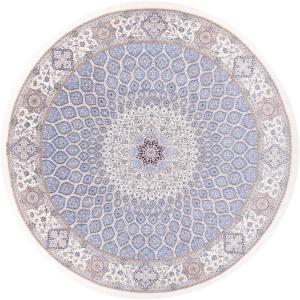
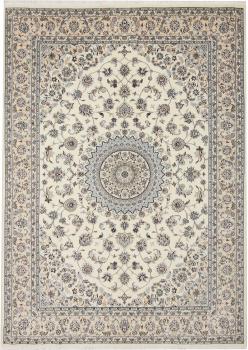
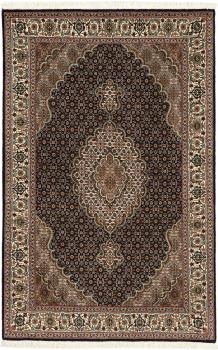
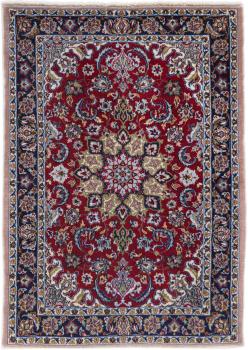
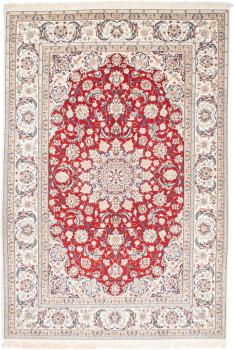
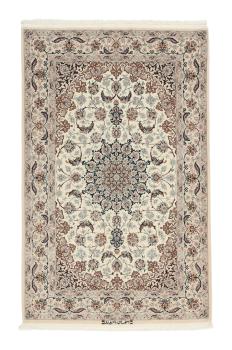
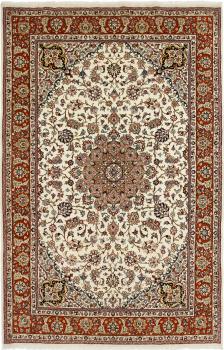
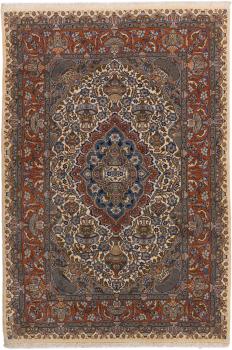
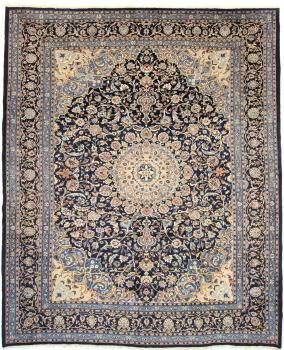
The small town of Nain is located in the central Persian highlands and developed, especially in the 20th century, into a significant center for fine carpet weaving. Nain rugs are known for their very good quality, their solid elegance, and their harmonious clarity. The sizes range from small runners to oversized living room formats. Particularly characteristic of Nain rugs is a light overall tone with precise dark outline lines and very regular proportions.
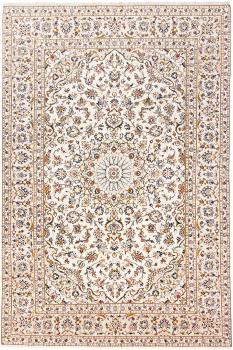
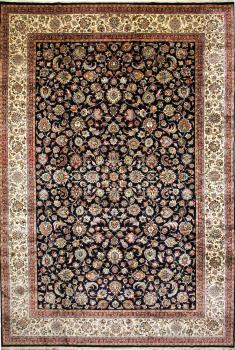
Nain Rugs are primarily made from fine sheep wool, often complemented by silk to emphasize the details. The finest Nain rugs are made entirely of Persian silk. The patterns and color choices are always balanced. The strictly regulated color palette, featuring the base tones of gray-beige, cream, ivory, light blue, dark blue, and red, creates a beautifully balanced appearance. The design typically follows the classic mirrored Persian structure, usually in a medallion layout, complemented by subtle floral arabesques, palmettes, and symmetrically arranged vine systems.
Nain is characterized by a low to medium pile height that provides a uniform and pleasant feel. It is knotted using the asymmetrical Persian knot, which allows for precise line work. The quality levels range from 9La (up to about 500,000 knots/m²) to 6La (up to about 700,000 knots/m²) to very fine 4La knots (700,000–1,000,000 knots/m²). The weaving technique exhibits high uniformity, exact contours, and the typical perfection found in city knottings.
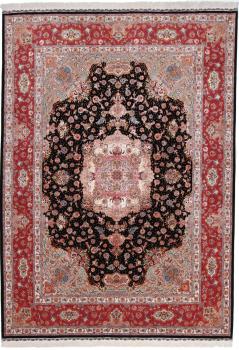
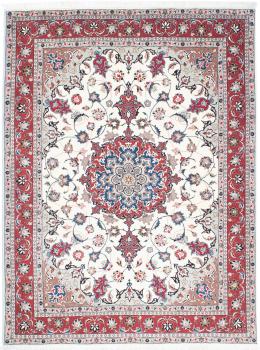
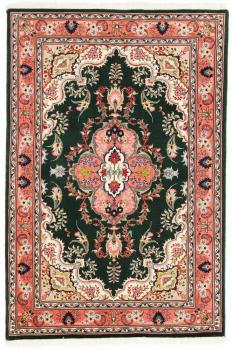
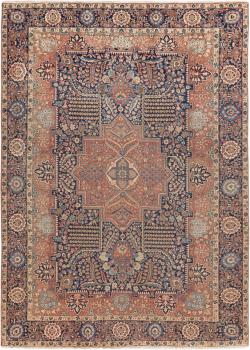
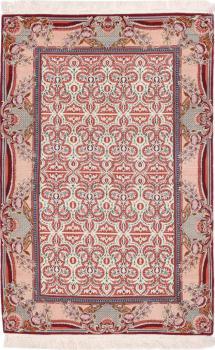
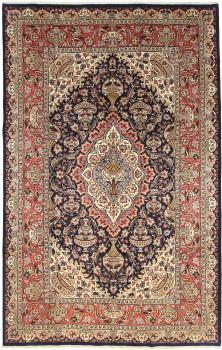
Tabriz rugs are typically made from fine sheep wool or often from the softer cork wool, usually with a cotton warp and occasional silk accents to highlight details. The wide color palette includes many shades of red and pink, ranging from the typically pastel-like rose tones to vibrant chimney red, often combined with beige, ivory, gold-gray, as well as blue, green, and brown. The design often appears more dynamic, creatively liberated, and playful than in other city weavings. From the classic medallion to arabesques, geometric-floral hybrid patterns, floral motifs, and even hunting scenes or figurative representations, Tabriz offers one of the richest design worlds of all origins.
The pile of Tabriz is low and firm, which leads to high contour sharpness. It is typically knotted using the symmetrical Turkish knot, a feature that distinguishes it from many other Persian regions. Knot densities usually range from 40–70 Raj , which is about 250,000 to 600,000 knots per square meter, with up to 1,000,000 knots/m² not being uncommon. The weaving technique is characterized by exceptional precision, fine shading, and flowing color transitions.
Tabriz Rugs are typically made from fine sheep wool or often from the softer cork wool, usually with a cotton warp and occasional silk accents to highlight details. The wide color palette includes many shades of red and pink, ranging from the typical pastel-like rose tones to vibrant chimney red, often combined with beige, ivory, gold-gray, as well as blue, green, and brown. The designs often appear more dynamic, creatively liberated, and playful compared to other city weavings. From classic medallions to arabesques, geometric-floral hybrid patterns, floral motifs, hunting scenes, or figurative representations, Tabriz offers one of the richest design worlds of all origins.
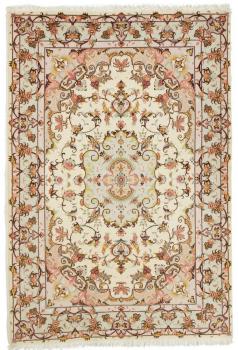
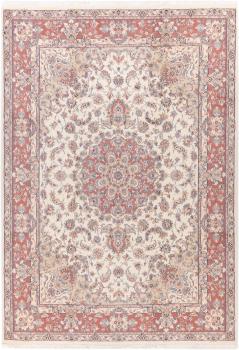
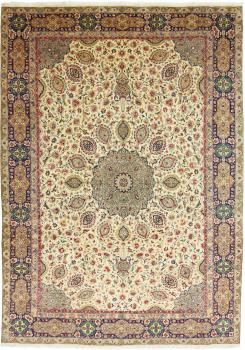
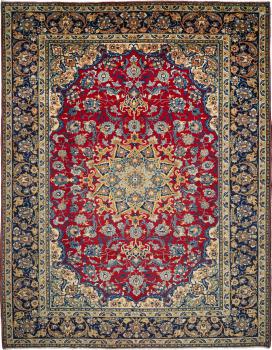
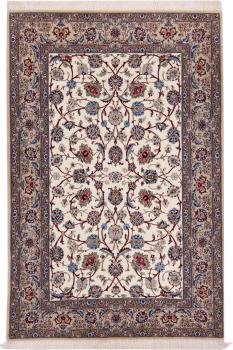
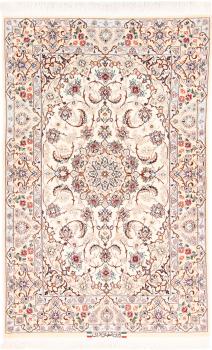
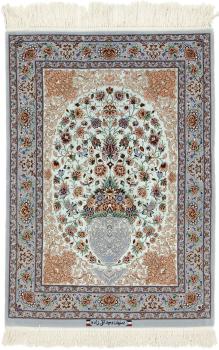
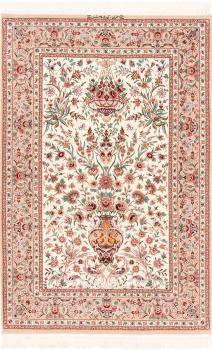
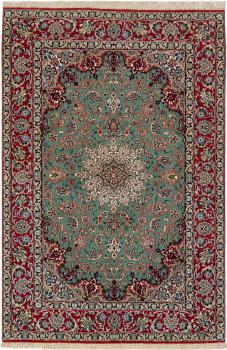
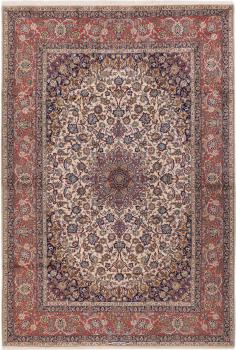
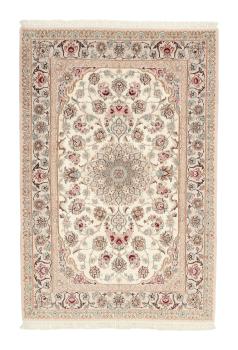
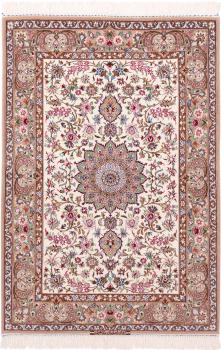
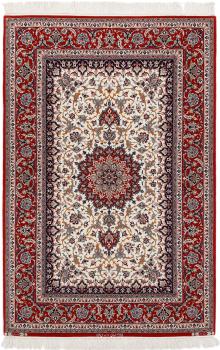
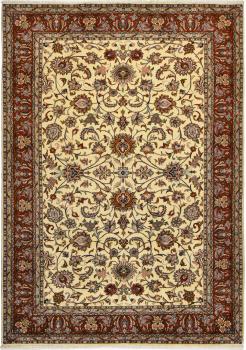
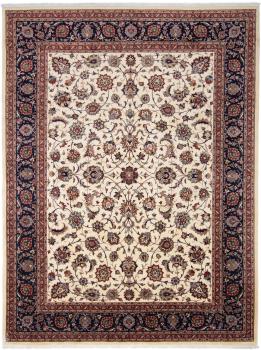
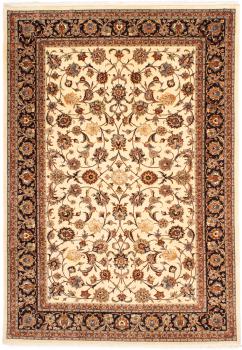
Isfahan is one of the historically most important cities of Persia and has been considered the cultural heart of Persian art and architecture since the Safavid era. The carpets from this region reflect this high artistic tradition. They are characterized by cultivated harmony and precise craftsmanship. Isfahan carpets mainly come in medium to large sizes. Their extremely fine line work and softly shimmering silk details make them easily recognizable.
Isfahan Rugs are usually woven from the finest new wool, often from cork wool, and silk rugs are also not uncommon in Isfahan. The materials are often combined, resulting in patterns of exceptional delicacy. The typical color palette includes natural white, ivory, dark red, royal blue, and gold, giving the rugs a majestic appearance. Opulent designs featuring floral arabesques, intricate medallions, and symmetrically structured compositions are typical, often inspired by Persian gardens or sacred geometry. The design of the rugs always appears balanced and possesses a noble, highly aesthetic grace.
The pile of Isfahan is low and velvety. The asymmetrical Persian knot is tied in high knot densities of 500,000 to over 1,000,000 knots per square meter, allowing for a clear representation of intricate patterns. The weaving techniques are executed with great care – master workshops like Seirafian are internationally known for extreme precision and fine contours. The carpets are considered high-quality handicraft objects due to their craftsmanship and are regarded by experts as the undisputed number one among all Persian rugs.
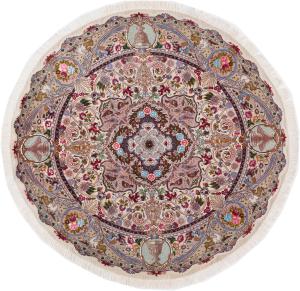
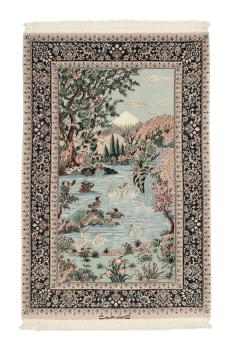
Ghom is a relatively young carpet region in Central Persia, but it quickly developed in the 20th century into an internationally leading center for the finest silk carpets. Today, its provenance is inextricably linked to luxurious small and medium formats that immediately catch the eye due to their brilliance and intricate detail. The characteristic silk sheen, which gives Ghom carpets their distinctive aura, is particularly identifiable.
Ghom Rugs are primarily made of pure silk, which makes the colors appear particularly clear and intense. The color palette ranges from elegant pastel shades to vibrant gold, blue, and red tones. The designs are very opulent and rich. They include exquisite medallions, garden motifs, figurative scenes, and representations reminiscent of miniature paintings. The fineness of the silk results in rugs with extremely delicate and playful designs, as well as highly detailed depictions that often look like paintings.
The pile height is very low due to the materials used, resulting in carpets that are quite thin (approximately 3 – 4 mm). The surface appears smooth and extremely supple. Ghom utilizes the asymmetrical Persian knot with very high knot densities ranging from 800,000 to over 1,000,000 knots per square meter. The knotting techniques are highly precise and involve intricate craftsmanship. Fine lines, seamless color gradients, as well as intricately accentuated ornaments and contrasts are among the technical characteristics of this provenance.
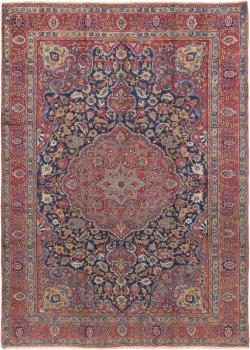
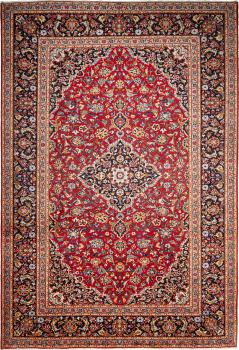
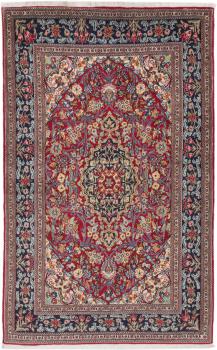
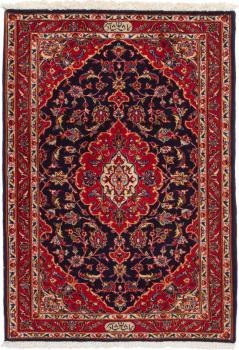
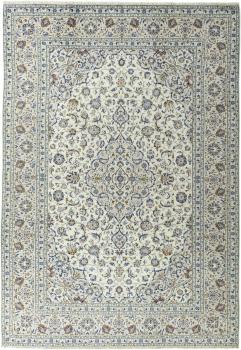
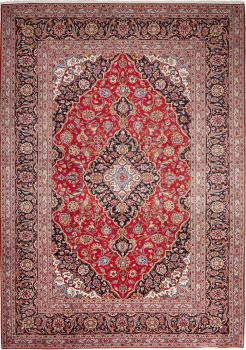
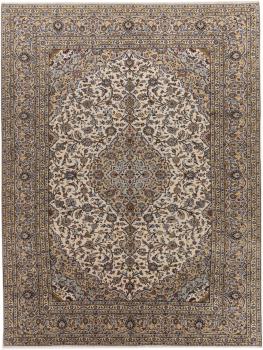
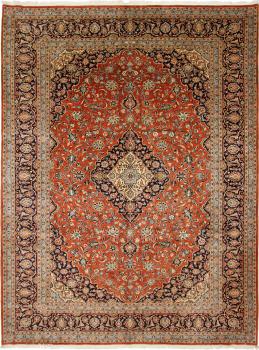
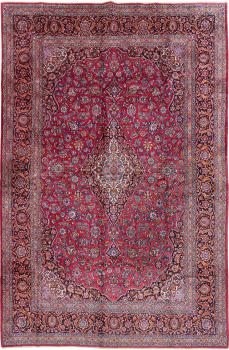
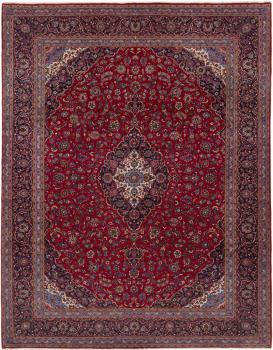
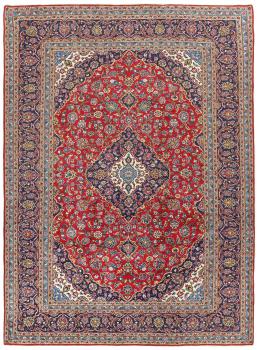
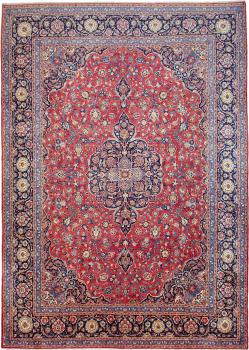
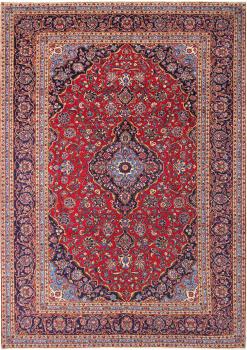
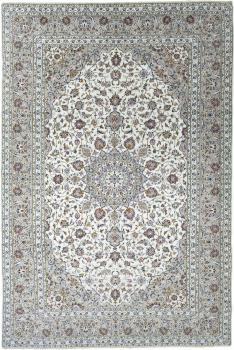
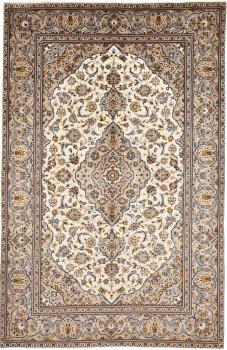
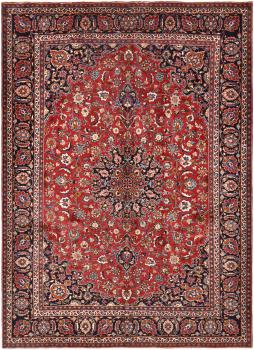
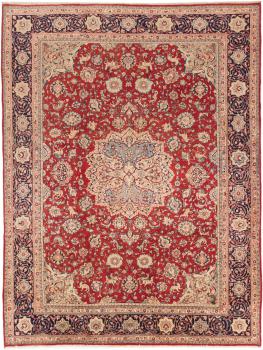
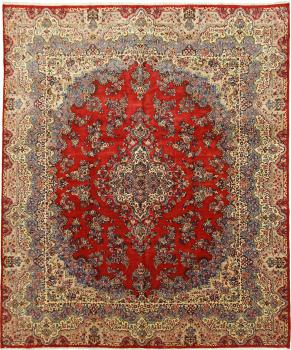
Keshan is an oasis city in Central Persia that has developed over centuries into an important hub and marketplace between trade routes, as well as a significant center for Persian carpet weaving. Keshan carpets are usually made in larger sizes, as they were traditionally intended for representative spaces and living areas. Typical and easily recognizable are the distinctive central medallion and the classic red-blue color composition, which is often considered the epitome of Persian carpet style.
Keshan Rugs are primarily woven from high-quality, firm wool that is valued for its durability and clear color absorption. Cotton is almost always used as the warp, while silk is rarely incorporated into details. The classic color palette includes deep red, rich dark blue, ivory, and occasional accent colors like turquoise or gold. The typical design follows a traditional, symmetrical medallion composition with floral arabesques, palmettes, and carefully balanced borders. The ornamental density appears rich, yet always harmonious and orderly.
The pile height of Keshan rugs is usually medium-high, creating a soft, dense texture. They are knotted using the asymmetrical Persian knot, which allows for a precise representation of floral patterns. Typical knot densities range from about 200,000 to 350,000 knots per square meter, with older masterpieces occasionally exceeding this. In terms of weaving technique, they exhibit a uniform structure, stable craftsmanship, and the clear contours typical of traditional workshops. Keshan rugs remain among the most popular, reliable, and classic Persian origins to this day.
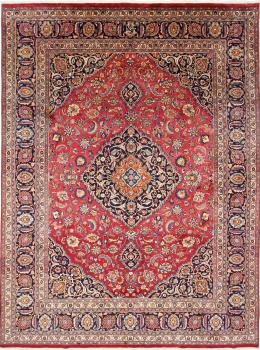
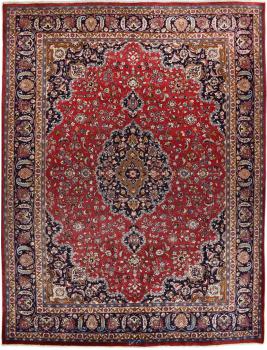
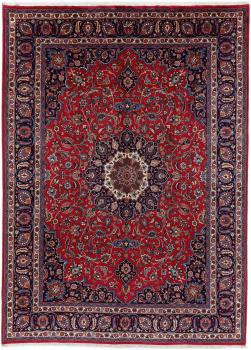
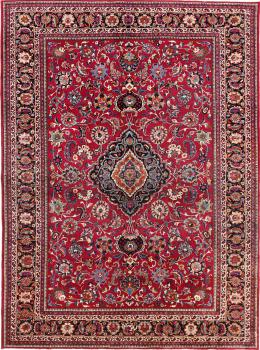
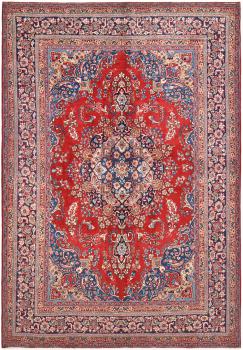
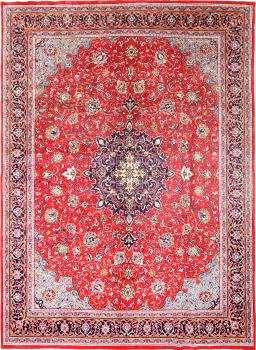
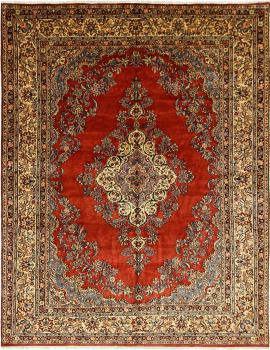
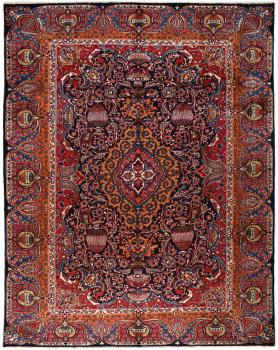
Mashhad is a significant pilgrimage and trading city in the Khorasan province in northeastern Persia. The entire region is known for its high-quality wool production and vibrant weaving tradition. Mashhad rugs are often woven in large formats and immediately impress with their bold colors and monumental patterns. Particularly noticeable are the deep red tones and the generous medallion architecture, which makes Mashhad rugs unmistakable at first glance.
Mashhad rugs typically have a medium to high pile, giving them a soft, dense, and pleasant texture. They are knotted using the asymmetrical Persian knot, which supports the representation of large-scale patterns. Common knot densities range from about 160,000 to 300,000 knots per square meter, and in older or particularly fine pieces, it can be even higher. The weaving technique is solid and uniform, with clear contours and well-defined color areas. As a result, Mashhad rugs are considered durable, classic Persian utility rugs with a representative appeal.
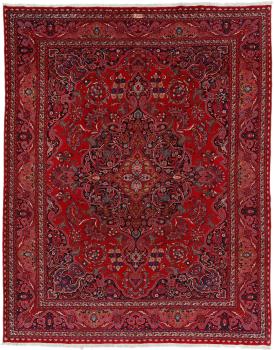
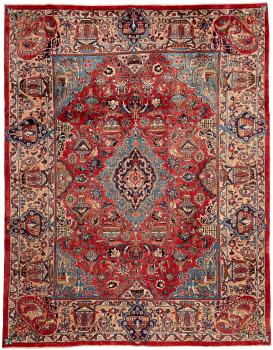
Mashhad Carpets are predominantly made from high-quality, firm new wool from the Khorasan region, which is valued for its durability and depth of color expression. The color palette is rich in dark reds and wine reds, often combined with midnight blue, beige, or ivory. The design typically follows an impressive medallion composition with sprawling floral ornaments, large palmettes, and lush vine systems. The patterns appear powerful, generously laid out, and convey a sense of warmth and opulence that is characteristic of this provenance.
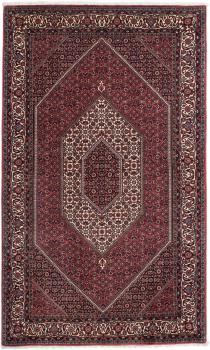
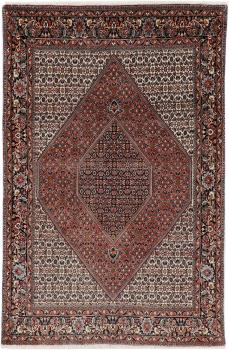
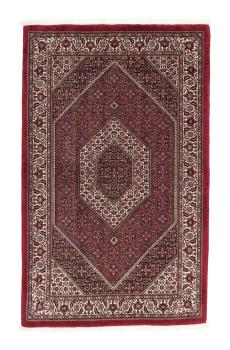
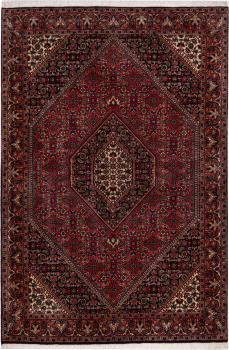
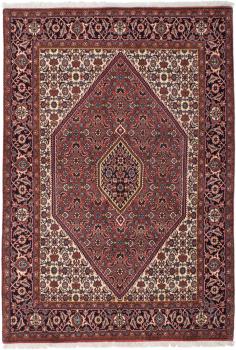
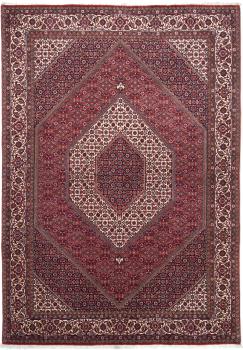
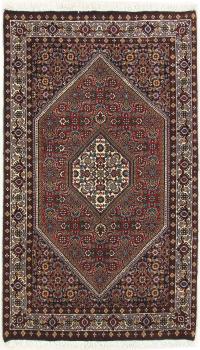
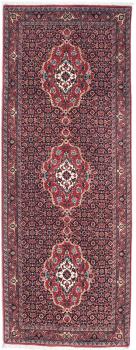
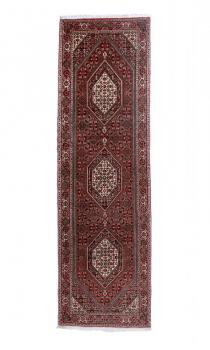
Bidjar is located in Kurdistan, the northwest region of Persia, and has been known for its very robust and durable carpets for centuries. The deeply rooted Kurdish weaving tradition influences the entire production process. Bidjar carpets are usually made in medium to large sizes and are instantly recognizable by their immense compactness and high weight. Due to this exceptional stability, the provenance is nicknamed "the Iron Carpet of Persia."
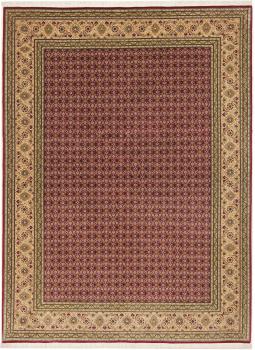
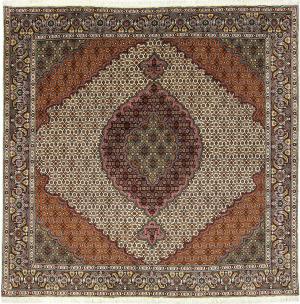
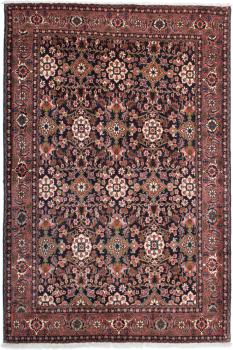
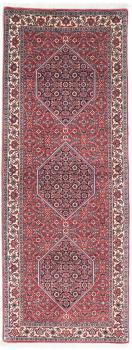
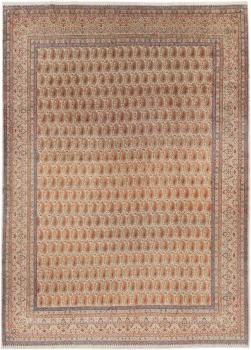
Bidjar Rugs are made from dense, durable highland sheep wool, which supports their strength and vibrant color effects. Typical colors include red, blue, and beige, occasionally complemented by green or gold. Characteristic patterns include Mahi or Herati designs, geometric-floral hybrid forms, and strictly structured allover layouts. The designs appear compact, rhythmic, and create a distinctive optical depth.
Bidjar rugs have a medium to medium-high pile and an exceptionally firm and compact structure. They are typically woven using the symmetrical Turkish knot. The knot densities typically range from 200,000 to 350,000 knots per square meter, but knot densities of up to 600,000 knots/m² are not uncommon. A particularly characteristic feature is the special wet knotting technique: the wool is moistened during the knotting process and struck extremely tightly, resulting in the legendary density and durability of this provenance.
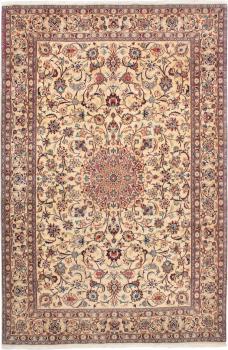
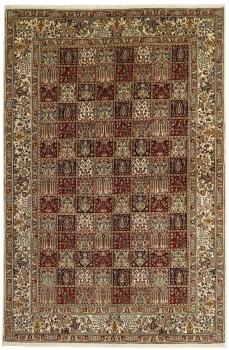
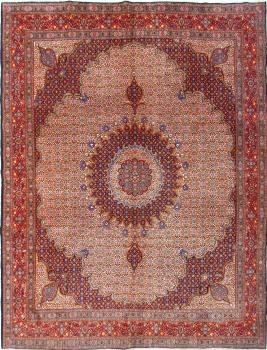
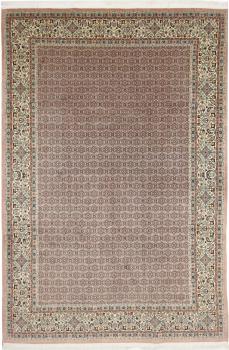
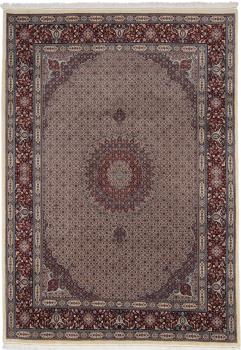
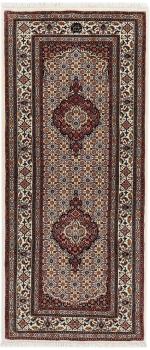
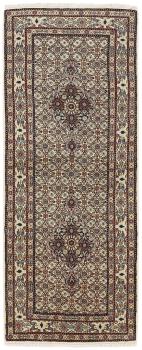
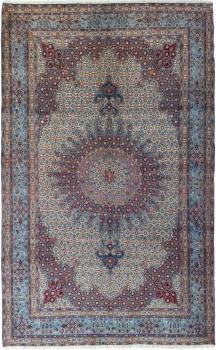
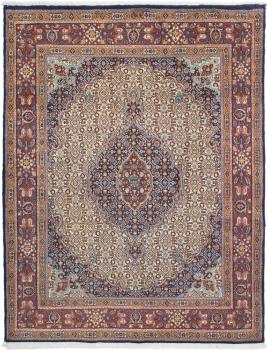
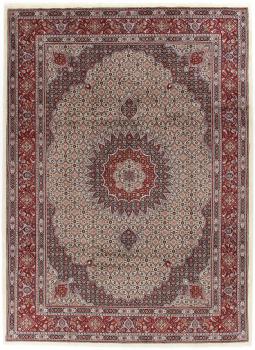
Moud is located south of Mashhad in the South Khorasan region and is one of the younger, yet highly regarded carpet-producing areas of Persia. The region combines traditional village weaving techniques with urban-like precision and is today especially known for its harmonious, finely structured carpets. Moud carpets predominantly come in medium to large sizes. Characteristic and easily recognizable is their elegant, calm effect as well as the structured ornamental design.
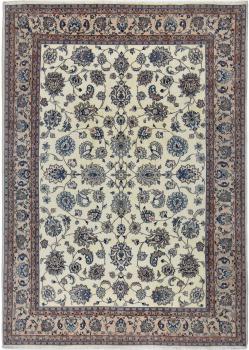
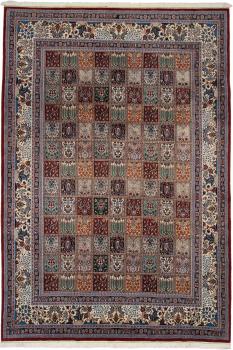
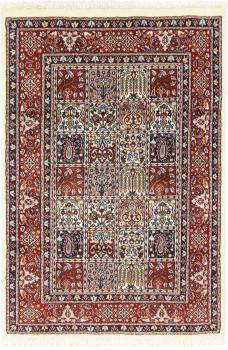
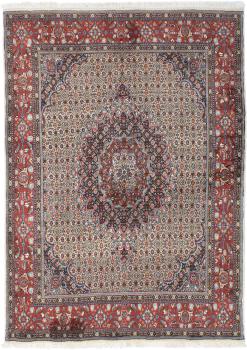
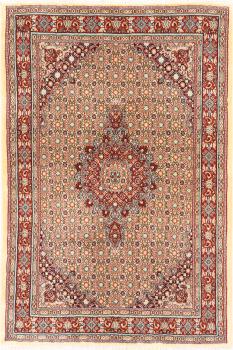
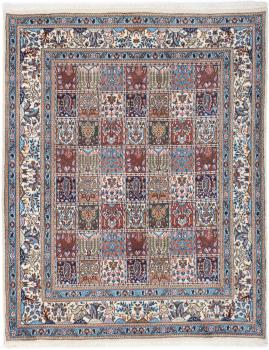
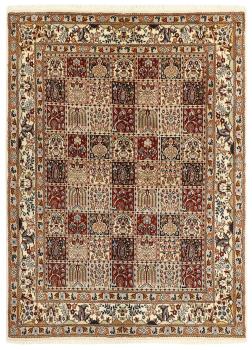
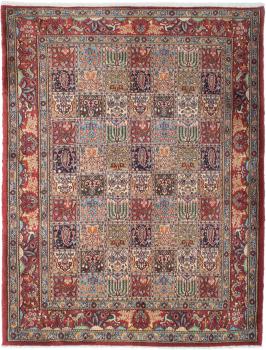
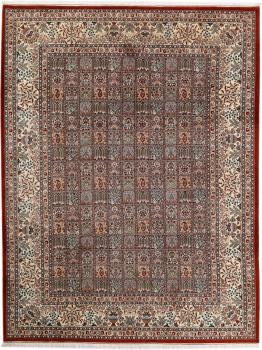
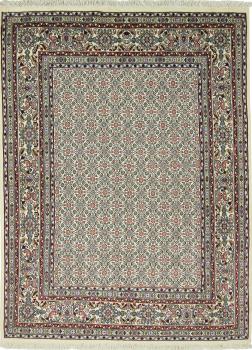
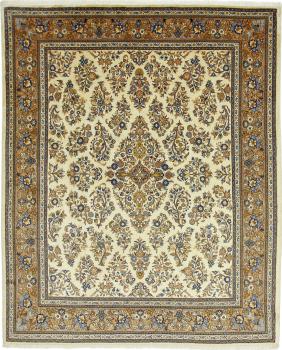
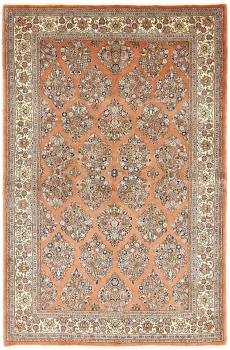
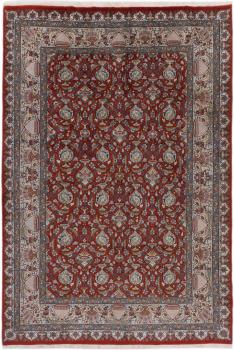
Moud Rugs are primarily made from high-quality new wool, usually with a cotton warp and occasional silk accents in the details. The color palette includes soft cream and beige tones, light blue, terracotta, and dark blue. Stylistically, Moud is known for two design lines: the widely popular Moud Mahi with a fine Herati pattern, and the Moud Garden, which consists of small rectangular fields with floral motifs. Both designs appear balanced, calm, and very clear in their lines.
Moud rugs have a medium pile with a pleasantly soft, closed structure. They are knotted using the asymmetrical Persian knot. The knot densities vary by workshop, ranging from about 250,000 to 400,000 knots per square meter. The weaving technique is precise and consistent, with cleanly defined contours and well-balanced color areas. As a result, Moud rugs are considered durable, decorative everyday and living room rugs with a particularly harmonious appearance.
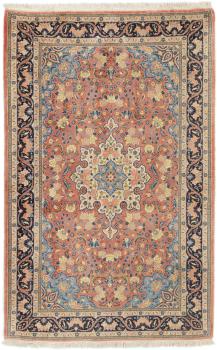
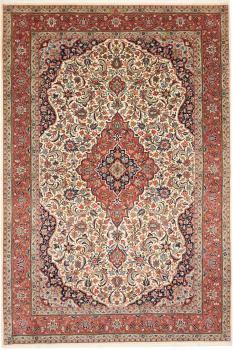
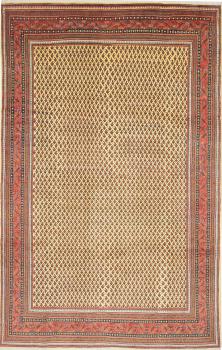
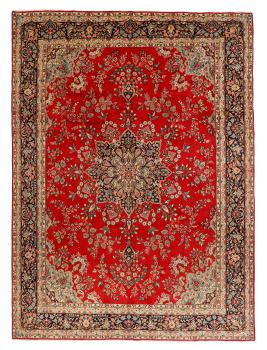
Sarough is located in western Persia near Arak and is one of the traditional centers of Persian carpet weaving. The region was particularly influenced by exports to the USA in the 19th and early 20th centuries, which significantly affected the formats and color preferences. Sarough rugs predominantly come in medium to oversized dimensions and are easily recognizable by their lush floral motifs and warm, soft appearance.
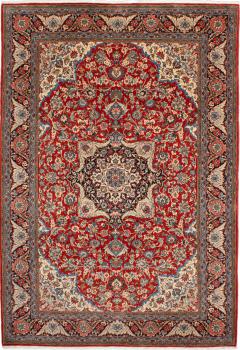
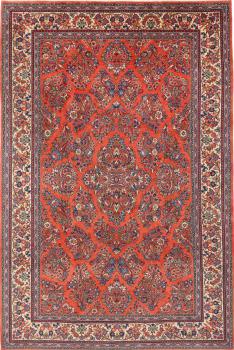
Sarough Rugs are primarily made from high-quality, oil-rich wool, known for its dense, smooth texture and brilliant color reproduction. Typical colors include vibrant red, blue, pink, beige, and ivory, often in warm, harmonious shades. The design usually features curved floral compositions, large palmettes, and gently flowing arabesques. Both classic medallion layouts and richly designed all-over patterns are characteristic, giving Sarough rugs their elegant, representative effect.
Sarough rugs have a medium, dense pile with a soft texture. They are traditionally knotted using the asymmetrical Persian knot. The knot densities typically range between 250,000 and 450,000 knots per square meter. The weaving technique is executed with precision and uniformity, featuring clear contours and carefully coordinated color areas. As a result, Sarough rugs are considered durable, elegant area rugs with a classic Persian appeal.
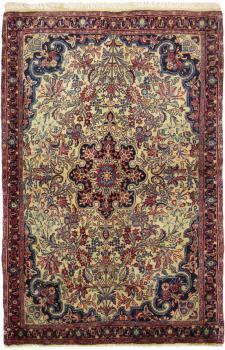
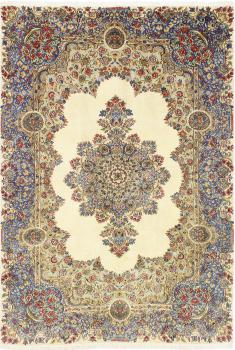
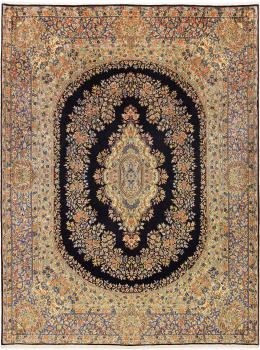
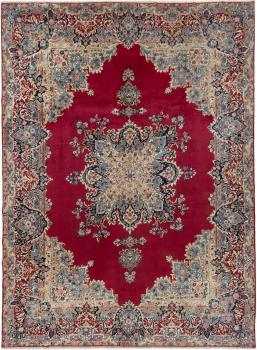
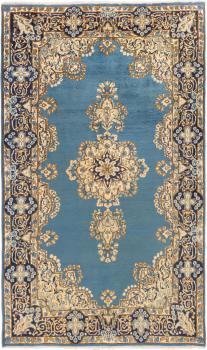
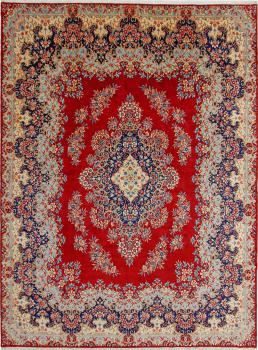
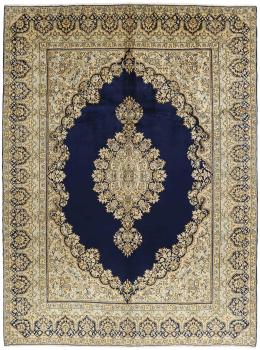
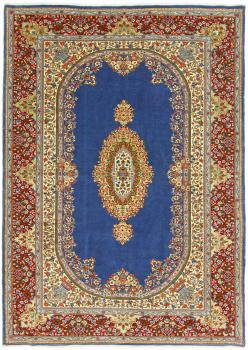
Kerman is located in the southeast of Persia and is one of the country's most traditional carpet regions. The city early on developed into a cultural and economic center, with its carpets being valued far beyond Persia. Kerman carpets are predominantly produced in medium to large sizes and are easily recognized by their soft appearance, elegant lines, and diverse color palette. The region is particularly known for its artistic Lavar-Kerman carpets.
Kerman Rugs are typically made from high-quality, soft wool, allowing for clear and vibrant color representation. The color palette is exceptionally broad, ranging from delicate pastel shades to dusty rose, light green, and beige, all the way to bold reds and blues. The designs often feature lush floral compositions with large palmettes, flowing arabesques, finely graduated ornamental fields, as well as strikingly large areas without motifs in the inner field, which create a colored frame that highlights the medallion and large ornaments, giving them an island-like effect. Both medallion designs and richly decorated all-over patterns are typical, contributing to the elegant, artistic impact of Kerman rugs.
Kerman rugs feature a medium, rather soft pile with a smooth texture. They are traditionally knotted using the asymmetrical Persian knot. The knot densities typically range between 200,000 and 350,000 knots per square meter, depending on the workshop. The weaving technique is meticulously executed, with even structures and fine, flowing contours. As a result, Kerman rugs are considered elegant, durable area rugs with a particularly artistic flair.
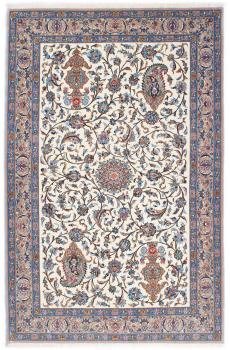
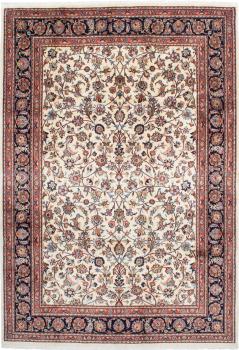
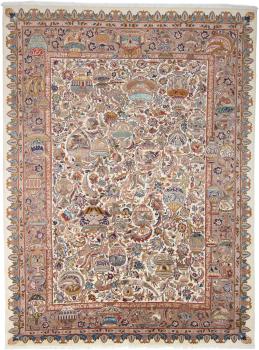
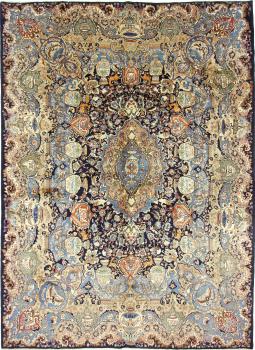
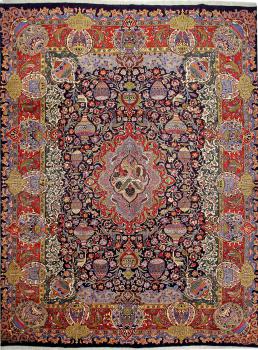
Kaschmar is located in the Razavi Khorasan province in northeastern Persia and developed in the 20th century into a well-known carpet region with its own distinctive design language. The provenance is famous for its large-format carpets, which often depict narrative or symbolic themes. Particularly characteristic are the rich, sometimes scenic representations and the clearly structured layouts, which make Kaschmar carpets easily recognizable.
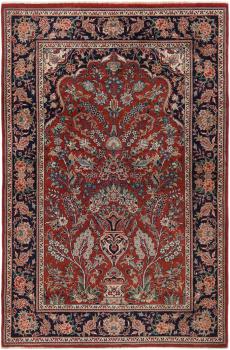
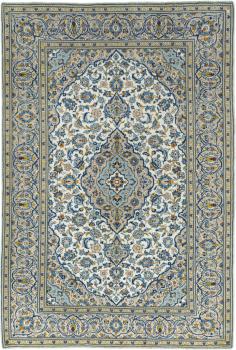
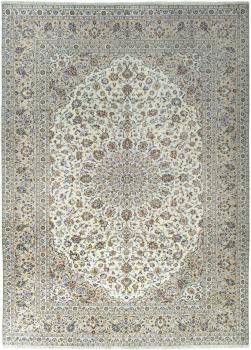
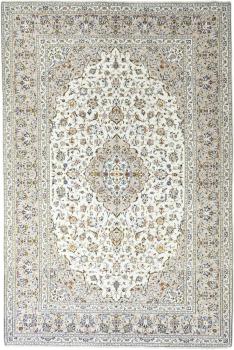
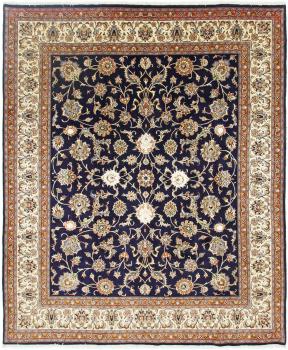
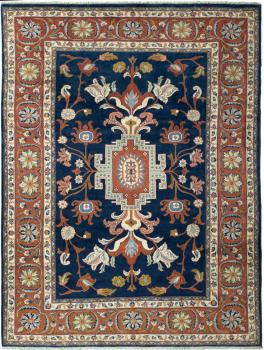
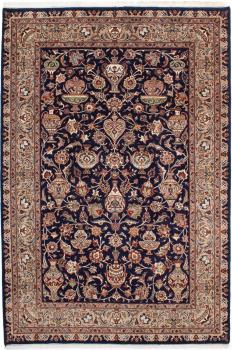
Kashmar Rugs are primarily made from high-quality, dense wool, usually with a cotton warp and occasional silk accents in motifs and outlines. The color palette includes shades of beige, blue, and red, often combined with gold, brown, or turquoise. The design is known for its narrative motifs: vase designs, hunting scenes, depictions of the tree of life, and historical scenes are typical variations. These are complemented by floral arabesques, medallion layouts, or decorative allover patterns that give Kashmar rugs their characteristic visual richness.
Kaschmar carpets have a medium to medium-high pile with a pleasantly dense, soft texture. They are knotted using the asymmetrical Persian knot. The knot densities typically range from 180,000 to 300,000 knots per square meter, depending on the workshop. The weaving technique is solid and consistently executed, making Kaschmar carpets durable, shape-retaining, and particularly well-suited for larger living spaces.