Anniversary Sale
Save up to 20% – even on already discounted rugs!

Your home has long been more than just a place to live. It is a retreat, a workspace, and a gathering place all at once. That makes an interior design style that radiates calm while also expressing personality all the more important. This is exactly where the Greenery style comes in.
Unlike many short-lived interior design trends, this style is inspired by nature. Warm colors, natural materials, and carefully chosen plants create spaces that feel inviting while remaining timeless. The goal is not to combine as many decorative elements as possible, but to create a balanced atmosphere in which every piece of furniture and every home accessory has its place.
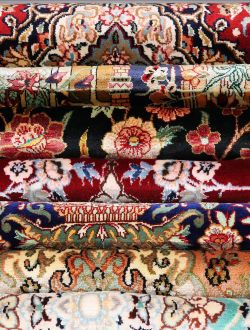
An often underestimated design element is the rug. It brings furniture, colors, and materials together into a harmonious overall look, defines individual living areas, and adds warmth and structure to rooms. Hand-knotted rugs made from natural materials are an especially good match for the Greenery style and highlight its natural character.
In this guide, you will learn step by step how to bring the Greenery style into your home. You will discover which colors and materials work especially well together, how to use plants intentionally, what to look for when choosing a rug, and which common decorating mistakes are easy to avoid. We will also show you how the Greenery style can be adapted to different rooms and interior design styles.
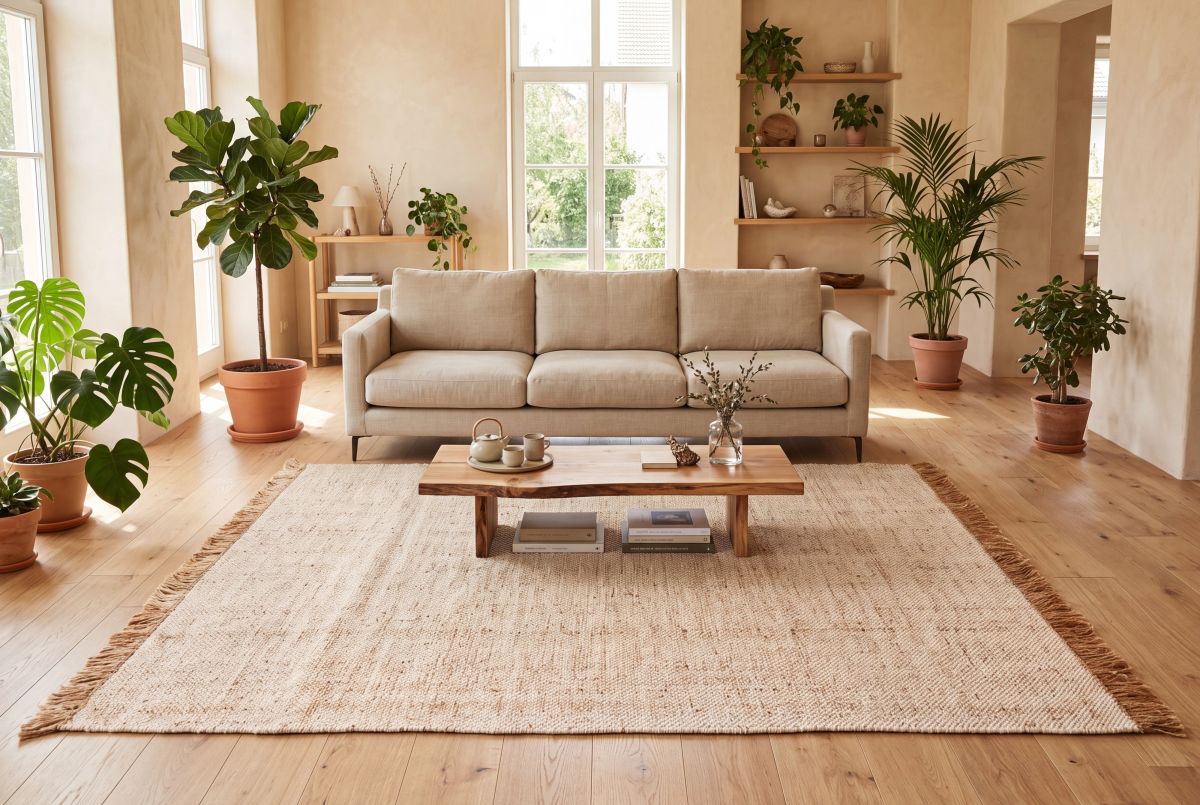
The Greenery style is a modern interior design style that intentionally puts nature at the center of the home. It’s not just about houseplants, but about a holistic living concept. Natural colors, high-quality materials, plenty of daylight, and a balanced room layout work together to create an atmosphere that feels calm, inviting, and timeless.
This home trend has its roots in biophilic design. The goal of this design concept is to strengthen the connection between people and nature, even inside buildings. Daylight, wood, stone, natural fibers, and plants create an environment where many people feel especially comfortable, while also adapting easily to different interior styles.
A major advantage of the Greenery style is its versatility. It pairs well with Scandinavian, modern, classic, or Japandi interiors and works just as well in small city apartments as it does in spacious homes. What matters most is not the size of the room, but the balanced interplay of all design elements.
The two terms are often used interchangeably, but they differ significantly.
Urban Jungle focuses on having as many plants as possible. The space feels lush, vibrant, and often resembles a small indoor garden.
Greenery style, on the other hand, takes a more holistic approach. Plants are an important element, but they are not the sole focus. It is the interplay of colors, materials, light, furniture, and textiles that creates the calm, natural atmosphere that defines this interior design style. A hand-knotted rug made from natural materials fits into this living concept just as naturally as wooden furniture or ceramic accessories.
| Color | Effect |
|---|---|
| Cream | Light, inviting, and timeless |
| Beige | Warm and calming |
| Greige | Modern and elegant |
| Sand | Natural and soft |
| Sage Green | Calm and harmonious |
| Olive Green | Warm and cozy |
The color scheme plays a key role in whether a room feels calm, cozy, or restless. In the Greenery style, the goal is therefore not to use as much green as possible. In fact, neutral natural tones form the foundation, while shades of green are used to create intentional accents.
A balanced color palette ensures that plants, furniture, and home textiles harmonize with one another and that the room maintains a timeless look over the long term.
A proven method from interior design is the 60-30-10 rule. It helps distribute colors evenly throughout a room.
The main color makes up about 60 percent of the space. This includes, for example, walls, larger furniture pieces, or curtains. Light tones such as cream, beige, or greige create a calm foundation.
The second color accounts for around 30 percent. It often appears in wood furniture, armchairs, or larger home accessories and adds warmth and depth to the room.
The final ten percent are reserved for accent colors. This is exactly where shades of green come into play. Plants, pillows, vases, or artwork add natural highlights without overwhelming the space.
This creates a balanced interior that feels harmonious and does not draw the eye to just one area.
Not every shade of green creates the same atmosphere. Muted natural tones are usually easier to pair and feel much calmer than bold or artificial-looking colors.
Sage green conveys a sense of lightness and pairs beautifully with light wood furniture. Olive green feels a bit warmer and works especially well with walnut or darker natural tones. Moss green evokes forests and adds more depth to living spaces. If you prefer a modern look, eucalyptus green can also be used as a subtle accent.
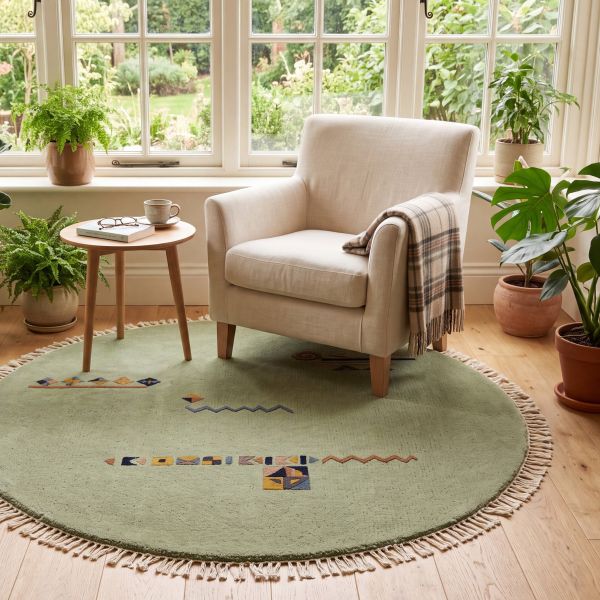
Plants, furniture, and colors shape the first impression of a room. But only the right rug brings these elements together into a cohesive overall look. It defines living areas, adds structure to open spaces, and makes a room feel complete.
In the greenery style, a rug should not be viewed in isolation. Its color, material, size, and texture influence the overall feel of the room. Choosing the rug only at the end often means missing out on a lot of potential in the interior design.
If you prefer a particularly elegant interior, you can also choose rugs made with natural silk or a silk blend. They reflect light in a subtle way and add refined accents without feeling overpowering.
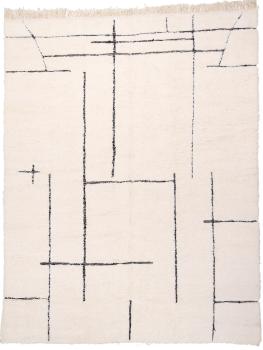
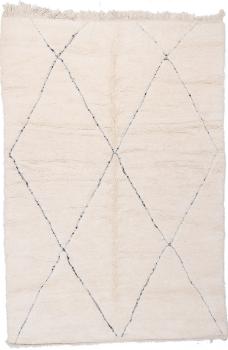
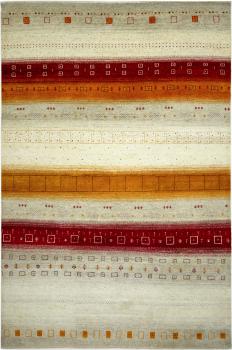
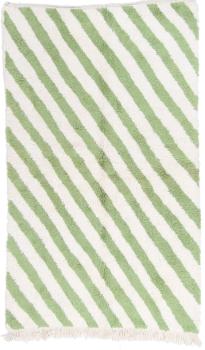
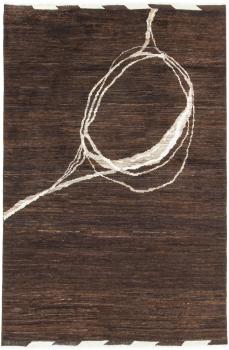
For modern living concepts, for example, Loribaft rugs are an excellent choice, as their soft virgin wool and simple design fit the greenery style perfectly. Nepal rugs also combine high-quality natural materials with a timeless design.
Not every greenery-inspired room needs a solid-color rug. What matters is that the pattern and the decor complement each other.
Simple interiors often benefit from subtle patterns or fine textures, as they add more depth to the room. If the decor is already very lively, for example with lots of plants or eye-catching furniture, a calm rug often creates a more harmonious look.
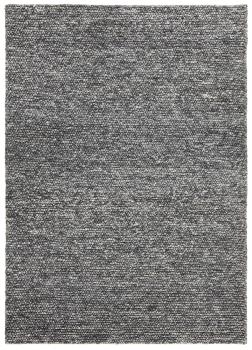
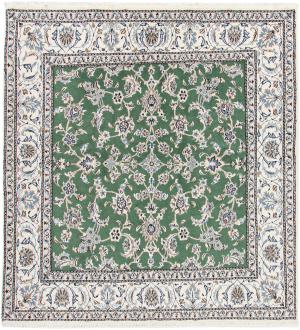
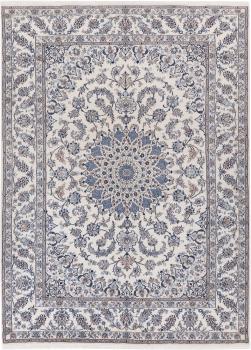
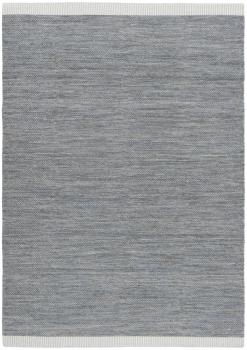
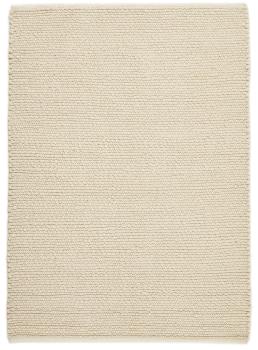
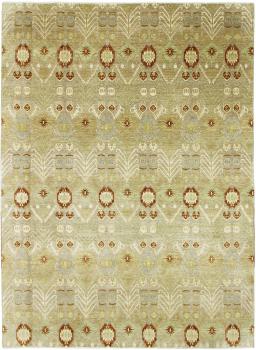
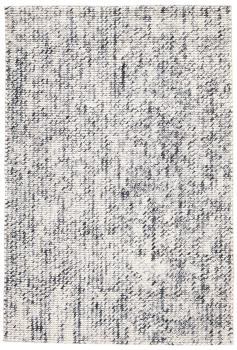
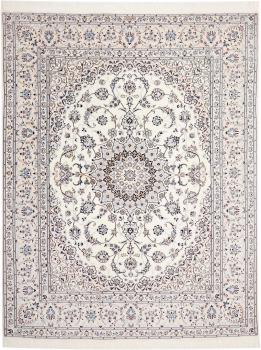
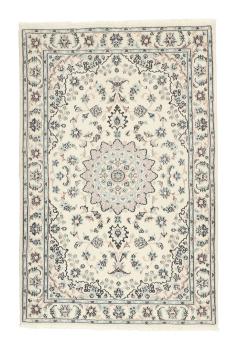
If you prefer traditional designs, Ziegler rugs offer a successful combination of classic patterns and natural tones. For modern interiors, on the other hand, Texura designer rugs are a great choice, with their textured surfaces creating a subtle, contemporary look.
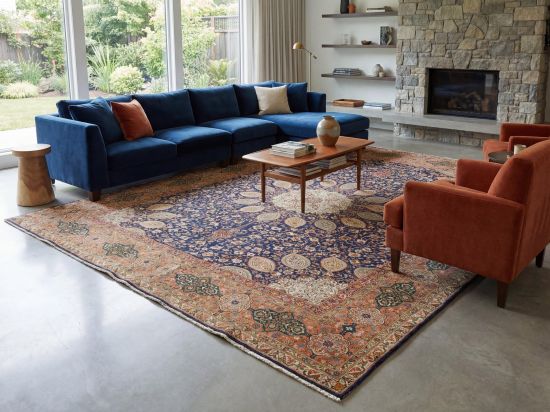
The right rug size has a bigger impact on a room’s proportions than many people realize. A rug that’s too small can make furniture groupings look disconnected, while a well-chosen rug visually ties the room together and creates a more harmonious feel.
As a rule of thumb, the rug should connect the key pieces of furniture in a living area and not look like a small island in the room.
| Room | Recommended Placement | Tip |
|---|---|---|
| Living Room | The front legs of the sofa and armchairs should sit on the rug. | In large living areas, the rug can also be placed under the entire seating arrangement. |
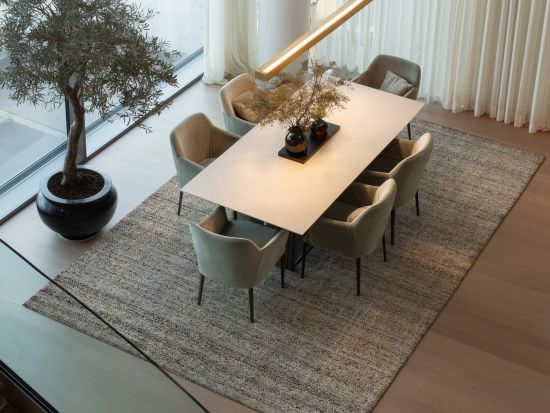
| Dining Room | The table and fully pulled-out chairs should remain on the rug. | Choose a rug that extends about 24–28 inches beyond the dining table on all sides. |
| Bedroom | The rug should be placed under the bed and extend out on the sides and at the foot of the bed. | Alternatively, place two runners to the left and right of the bed. |
| Home Office | The desk and office chair should sit completely on the rug. | Especially on hard floors, a rug helps improve room acoustics. |
| Hallway | A runner or long rug should follow the direction of foot traffic. | Leave some floor visible on both sides so the hallway feels more spacious. |
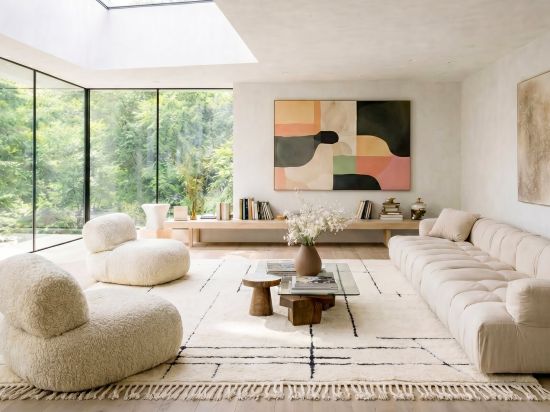
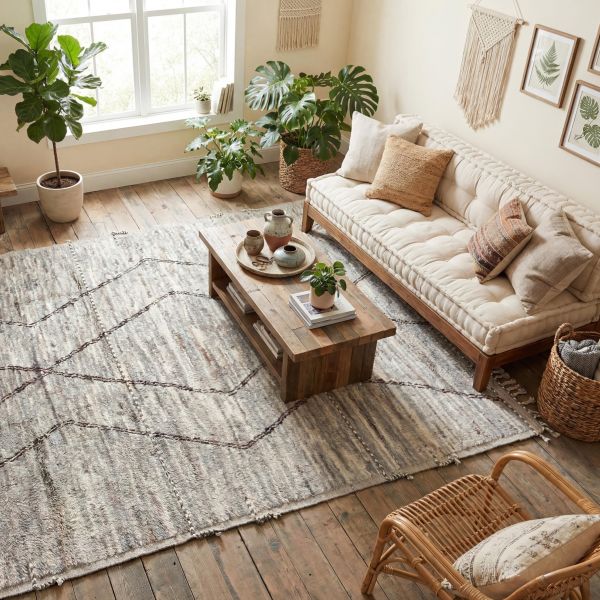
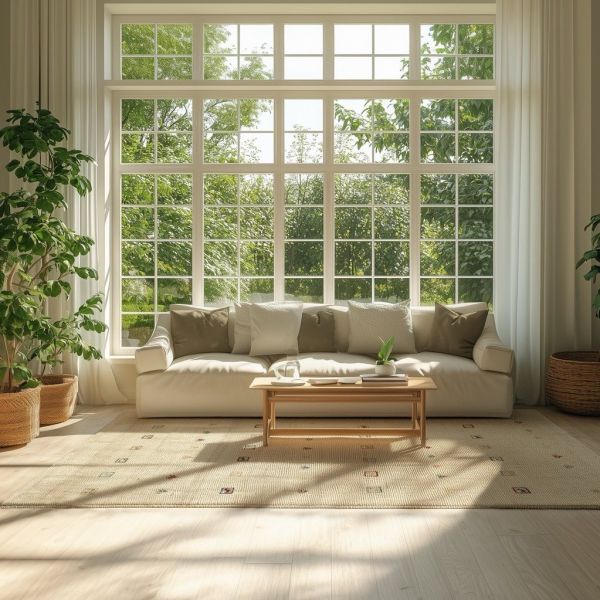
The living room is often the heart of the home and is ideal for bringing the Greenery style to life. Natural materials, a calm color palette, and thoughtfully placed plants create a relaxed atmosphere where everyday living and relaxation come together perfectly.
Large plants such as a Monstera or a Kentia palm look especially striking next to the sofa or in an open corner. Light linen curtains, solid wood furniture, and a few carefully chosen home accessories help the room feel open and inviting.
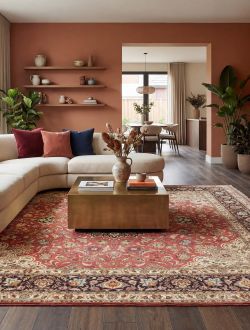
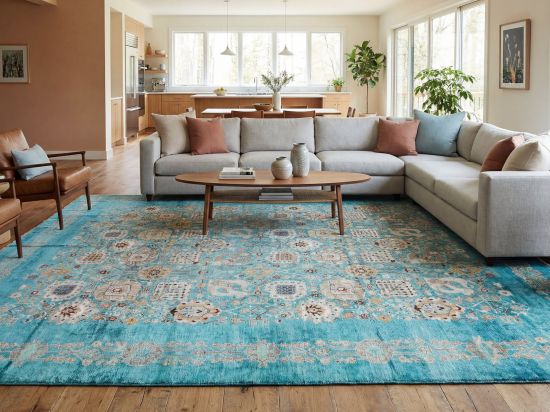
Especially in open-concept living spaces, a rug plays an important design role. It visually ties the sofa, armchair, and coffee table together and adds more structure to the room.
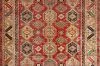
For modern greenery-inspired interiors, for example, Essence designer rugs are a great choice, as their simple design creates a calm, relaxed feel. If you want a bit more texture and natural character, Kazak rugs offer an appealing alternative. Their traditional patterns and warm natural colors add a subtle accent without overpowering the space.
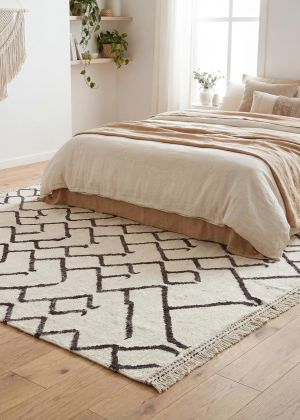
The bedroom is the place where relaxation takes center stage. That’s why the Greenery style feels especially harmonious here. Soft natural colors, natural materials, and minimalist furnishings create an atmosphere that feels calm without seeming cold or sterile.
Instead of lots of decorations, a few carefully chosen elements are often enough. Bedding made of linen or cotton, wooden furniture, and two or three houseplants give the room character while also creating a cozy, comfortable feel.
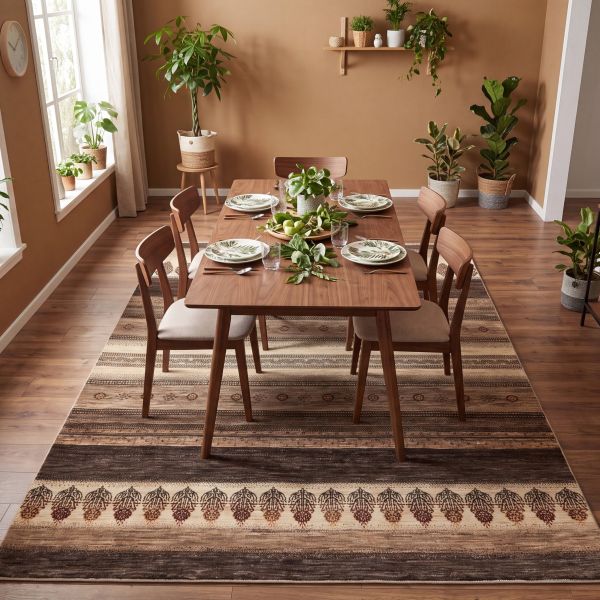
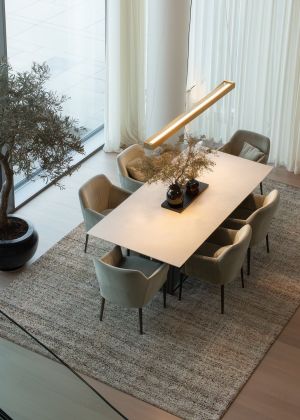
The dining room is a place where family and friends come together. That’s why the decor should not only feel natural, but also be practical for everyday use. The greenery style combines both: warm materials, a calm color palette, and a design that radiates coziness without sacrificing functionality.
A solid wood dining table often serves as the focal point of the room. Paired with wooden chairs or upholstered seating, it creates an inviting atmosphere that can be stylishly completed with just a few plants and simple home accessories.
Hand-knotted wool rugs are an excellent choice for this. Virgin wool is naturally durable and has dirt-repellent properties. Minor stains can often be removed easily, making wool rugs a practical solution for the dining room as well.
If you prefer a modern interior, Texura designer rugs offer a stylish addition with natural texture. For classic or timeless living concepts, Ziegler rugs are a great fit, with harmonious colors that pair beautifully with wooden furniture and natural materials.
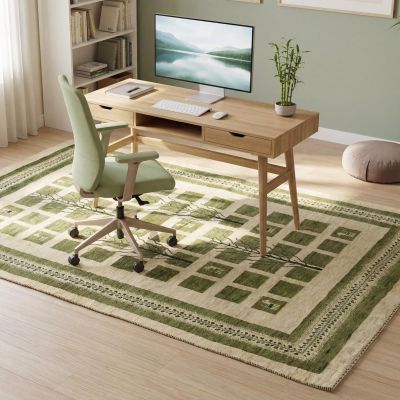
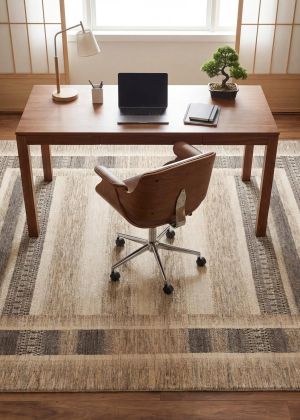
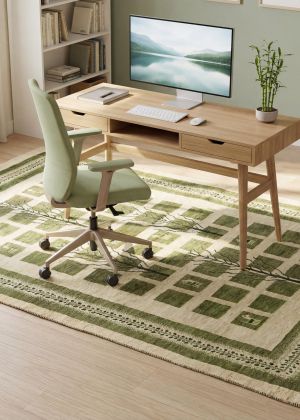
A home office should not only be functional, but also create a pleasant work atmosphere. The greenery style focuses on natural materials, light colors, and a clean, uncluttered setup that promotes concentration and well-being.
Just a few changes can significantly enhance the room. A wooden desk, a few plants, and a calm color palette are often enough to make the workspace feel more welcoming and inviting.
A natural color palette thrives on restraint. Two to three main colors are usually enough to create a harmonious overall look. Too many different shades of green, wood, or earth tones, on the other hand, can quickly make the space feel busy.
A common mistake is choosing a rug that sits only under the coffee table or doesn’t fully cover the dining area. A generously sized rug visually ties the furniture together and makes the room feel more refined.
Wood, linen, ceramic, and wool complement each other beautifully. However, if too many different materials or finishes are combined, the room loses its calm feel. A few high-quality materials usually look more elegant.
Plants are part of the greenery style, but more is not always better. A few larger plants often create a calmer look than many small pots scattered around the room. Leave enough open space so each plant can make an impact.
Sustainability plays a central role in the greenery style. Instead of regularly replacing furniture or home accessories, this interior design style focuses on durable materials, timeless design, and high-quality craftsmanship. The result is living spaces that still feel modern and inviting even after many years.
Natural materials such as solid wood, linen, cotton, and virgin wool age beautifully and develop their own character over time. Small signs of wear often make them feel even more authentic and tell their own story.