31 day money back guarantee Free shipping and free returns More than 88,000 unique rugs Since 1998: Your Expert for Hand Knotted Oriental Carpets
Uniq Rugs

Nowruz and Home: Significance, Rituals, and Persian Traditions

New Year's Festival

Nowruz is the traditional New Year's celebration of many Iranian and Central Asian cultures, beginning precisely at the moment of the spring equinox. For over 3,000 years, this festival has marked not only the start of a new year but also a conscious renewal in harmony with nature. When day and night are in balance, Nowruz symbolizes balance, renewal, and hope.

However, Nowruz is much more than a change of calendar. It is a time for preparation, cleansing, and consciously shaping one's home. Rituals such as Khaneh Tekani, the traditional house cleaning, or the symbolically rich Haft-Sin table demonstrate how closely culture, space, and personal new beginnings are interconnected.

In this article, you will learn what Nowruz means, the traditions that shape the Persian New Year, and why home plays a central role in it – from symbolic colors to handwoven Persian carpets that connect generations.
What is Nowruz?

Nowruz is the traditional New Year's celebration of many cultures with historical roots in ancient Persia. The name literally means "New Day" and marks the beginning of the new year in the Iranian calendar. Nowruz is celebrated precisely at the time of the spring equinox, when day and night are of equal length – usually on March 20 or 21. The origins of Nowruz date back over 3,000 years and are closely linked to Zoroastrian culture, one of the oldest monotheistic religions in the world. Today, the festival is celebrated in numerous countries, including Iran, Afghanistan, Tajikistan, Azerbaijan, and parts of the Caucasus and Central Asia. Since 2010, Nowruz has been recognized as an intangible cultural heritage of humanity by UNESCO. At its core, Nowruz symbolizes renewal, balance, and the conscious transition into a new life cycle. It is a celebration that connects nature, time, and humanity – beginning not only publicly but especially within one's own home.
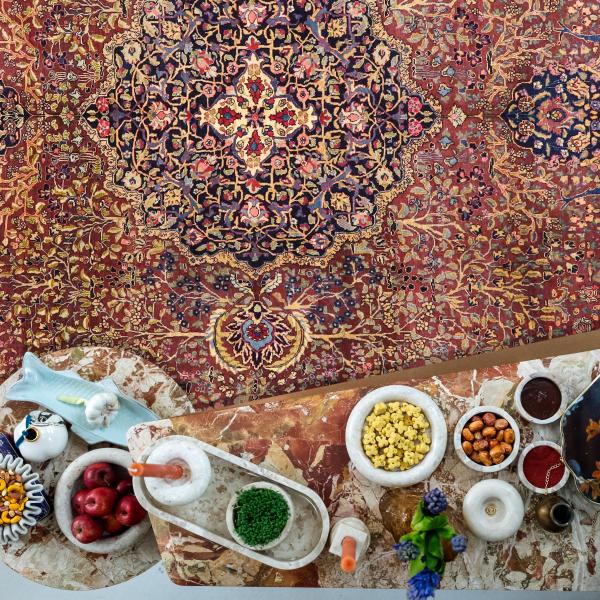
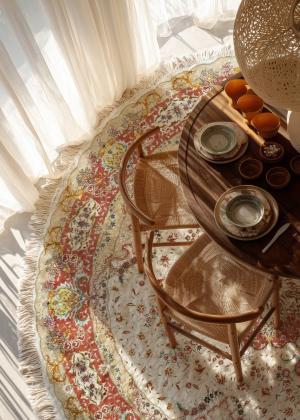
Persian rug with Haft-Sin table for Nowruz - traditional Iranian New Year celebration

The most important traditions of Nowruz

Nowruz is not only a symbolic new beginning, but a celebration with clear rituals that have been passed down through generations. These traditions connect nature, family, and home in a special way.

1. Haft Sin – The seven symbols of new beginnings

The most well-known tradition is the Haft-Sin table. "Haft" means seven, and "Sin" stands for the Persian letter "S." On a festively set table, seven symbolic elements are arranged, each starting with an "S":

  • Sabzeh (sprouts) – growth and renewal
  • Seeb (apple) – beauty and health
  • Seer (garlic) – protection
  • Senjed (oleaster) – love and wisdom
  • Serkeh (vinegar) – patience
  • Samanu (sweet pudding made from wheat sprouts) – prosperity
  • Somāq (spice) – sunrise and new beginnings

The table is often complemented by mirrors, candles, painted eggs, or a book of poetry. The Haft-Sin table is usually placed at the center of the home and symbolizes hope for the coming year.

2. Khaneh Tekani – The "House Shaking

In the weeks leading up to Nowruz, Khaneh Tekani takes place – the traditional house cleaning. Literally translated, it means "shaking the house."

During this time:

  • Rooms are thoroughly cleaned
  • Textiles are washed
  • Rugs are aired out or beaten
  • Windows are opened to let in fresh energy

This cleaning is not only practical but also symbolic: the old is released to make way for the new.

3. Chaharshanbe Suri – The Festival of Fire

On the last Wednesday before Nowruz, Chaharshanbe Suri is celebrated. Small fires are lit, and people symbolically jump over them. During this, words are spoken to transfer illness and worries to the fire.

The fire represents:
  • Purification
  • Transformation
  • Light
  • Energy

How long does Nowruz last?

Nowruz is traditionally celebrated over a period of 13 days. During this time, families come together, visit relatives and friends, enjoy festive meals, and engage in old customs that symbolize new beginnings and spring.

What happens on the 13th day?

The 13th day of Nowruz has a special significance and is called Sizdah Bedar. On this day, many families spend time in nature, have picnics, and symbolically bid farewell to the holiday season. The day represents lightness, community, and a harmonious transition into the new year.
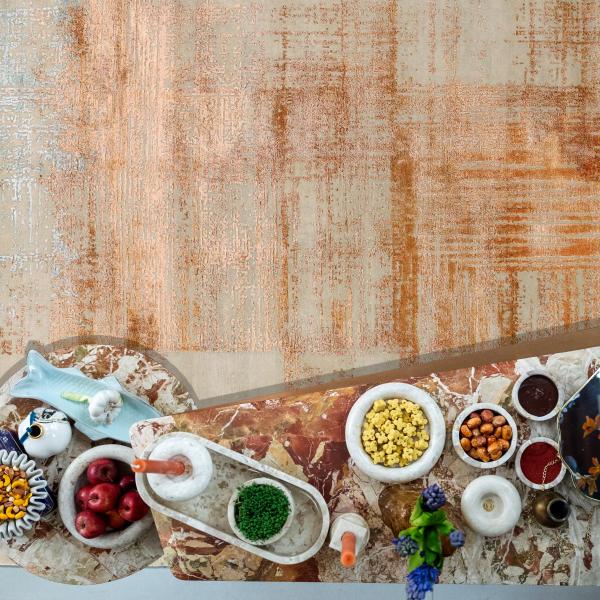
Modern rug with Haft-Sin decoration for Nowruz – Spring inspiration for home

Why these traditions are so important

All three rituals show: Nowruz does not begin on the holiday itself, but in the preparation. The home is intentionally arranged, cleaned, and symbolically charged. This creates a new beginning that takes place not only on the calendar but also in one's own living space.

The symbolic meaning of Nowruz

Nowruz is more than a New Year's celebration. It is a cultural understanding of time, nature, and human life. The focus is not just on the change of the calendar, but on the idea of a conscious transition – from darkness to light, from winter to spring, from the past to the new.

New Beginning as an Attitude

Nowruz symbolizes renewal. However, this new beginning is not a radical break, but a gentle transition. Just as nature slowly awakens, change in our own lives unfolds step by step. The celebration reminds us that growth takes time – and that each cycle holds a new opportunity.

Balance and Harmony

The exact moment of the spring equinox represents balance: day and night are in equilibrium. This cosmic balance becomes the guiding theme for the coming year. Harmony in the outside world – in the home, in order, in design – reflects inner equilibrium.

Connection to nature

Nowruz is deeply connected to the rhythm of nature. Flowers, fresh sprouts, light, and natural materials play a central role. The home is not viewed in isolation but as part of a larger natural cycle.

Generations and Continuity

Another central aspect of Nowruz is the passing down of tradition. Rituals are experienced within the family and not just explained. Objects, textiles, and handmade pieces accompany various life phases and are preserved across generations. This creates continuity in change – a balance between the past and the future.

Why the Home is at the Center of Nowruz

Nowruz does not begin in public spaces, but in one's own home. The preparation for the new year – cleaning, organizing, and intentional decorating – takes place within the four walls of the home. The home becomes a place of transition, where the past and future meet for a moment.

Rituals like Khaneh Tekani show that spaces are more than just functional places. They carry memories, habits, and stories within them. Through cleaning and redecorating, not only is there outer clarity, but also inner order. The home becomes a reflection of one's own new beginning.

Examples of suitable Persian rugs for Nowruz

Rugs with floral or nature-inspired motifs that symbolize spring are particularly well-suited. These include, for example:
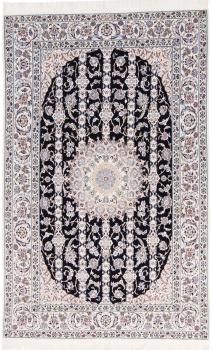
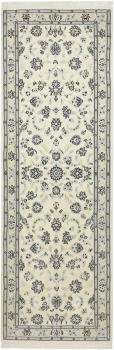
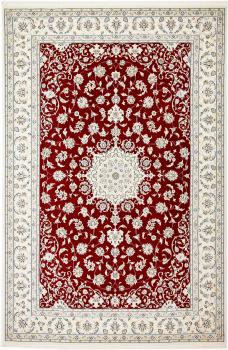
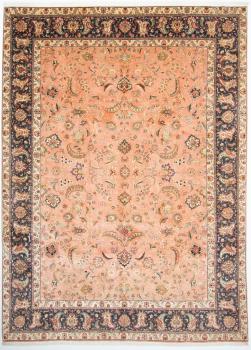
Nain Rugs

Nain Rugs

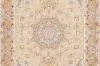
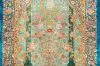
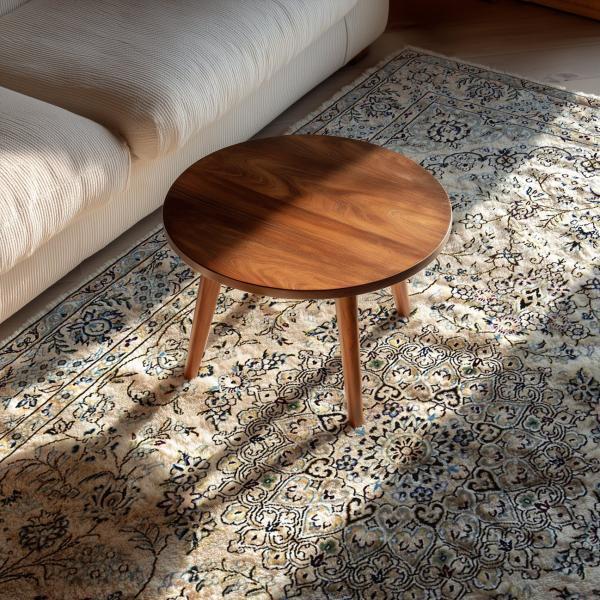
Nain Rugs are known for their fine, elegant floral patterns and bright color palettes in cream, blue, and beige, creating a calm and harmonious atmosphere.
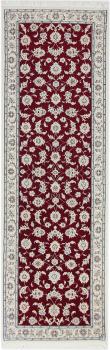
Round Tabriz rug with floral ornaments under the table

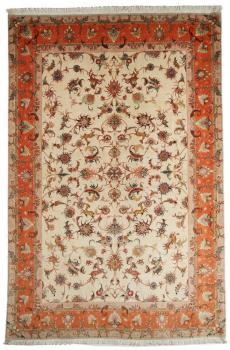
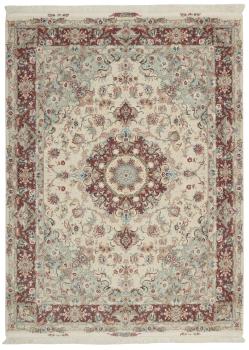
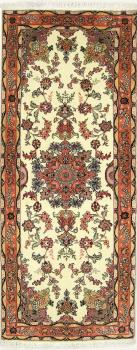
Tabriz Rugs

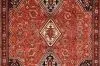
Tabriz rugs are characterized by versatile designs featuring floral elements as well as the famous 'Tree of Life', a strong symbol of growth and continuity.
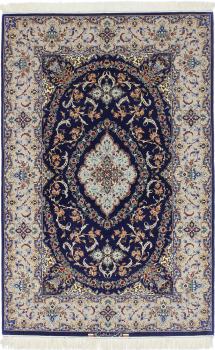
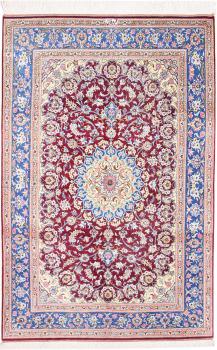
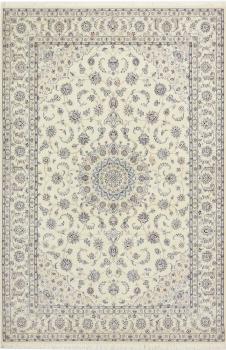
Isfahan rug with detailed floral patterns in a stylish living space

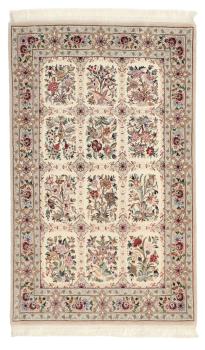
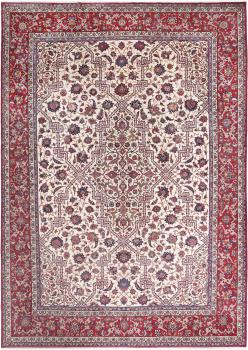
Isfahan Rugs

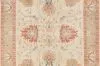
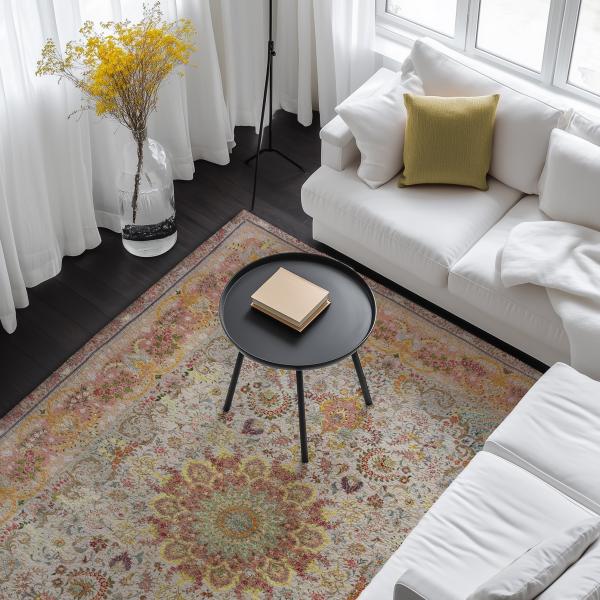
Isfahan rugs are intricate carpets featuring detailed floral patterns and central medallions that emphasize elegance and balance in the space.
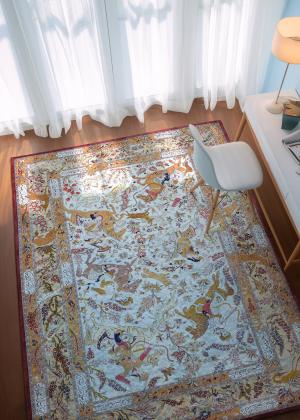
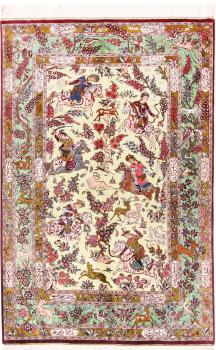
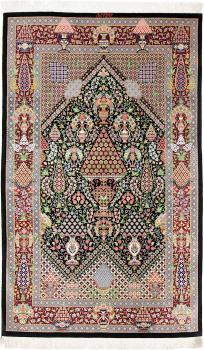
Qom silk tapestry with hunting and floral motifs and fine details in the room.

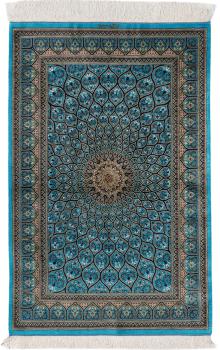
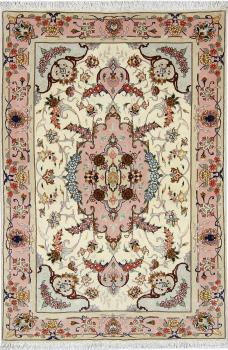
Qom Rugs

Qom Rugs are characterized by exceptionally fine designs, often made of silk, featuring intricate floral patterns and detailed ornaments that represent elegance, spirituality, and timeless beauty.
Nowruz Decoration Ideas:

Nowruz represents new beginnings, light, and renewal. With a few intentionally chosen elements, this atmosphere can also be felt in your own home. It is less about opulent decoration and more about clarity, connection to nature, and symbolic details.

1. Fresh flowers and green accents

Tulips, hyacinths, or daffodils symbolize spring. Small bowls with fresh sprouts (Sabzeh) also bring liveliness to the space. Green represents growth and continuity – a central theme of Nowruz.

2. Bright textiles and natural materials

Light fabrics, bright colors, and materials like wool, cotton, or silk create a calm, clear atmosphere. Natural tones such as cream, beige, or soft green enhance the feeling of a new beginning.

3. Deliberately stage the detention sin table

The traditional Haft-Sin table can be interpreted in a modern and minimalist way. A calm table, candles, a mirror, and the seven symbolic elements form the centerpiece of the room – a place for gathering and reflection.

4. Carpets with floral or symmetrical patterns

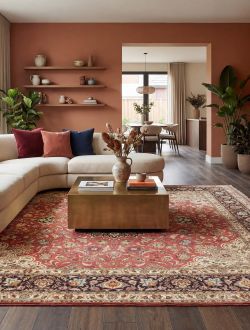
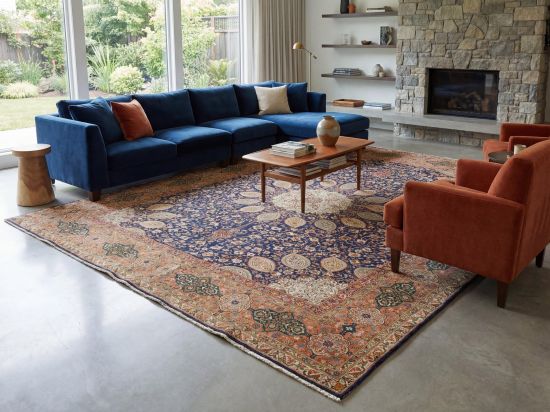
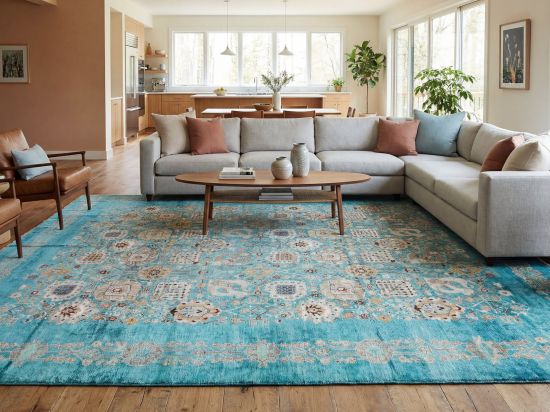
A hand-knotted rug with floral motifs or a balanced structure enhances the idea of harmony and spring. Particularly warm shades of red, fresh greens, or calm blue tones bring depth and balance to the space.
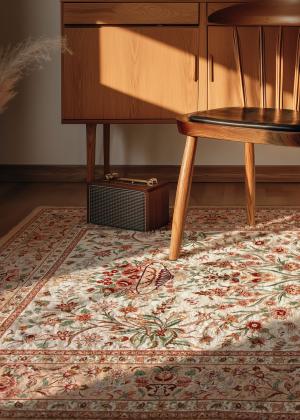
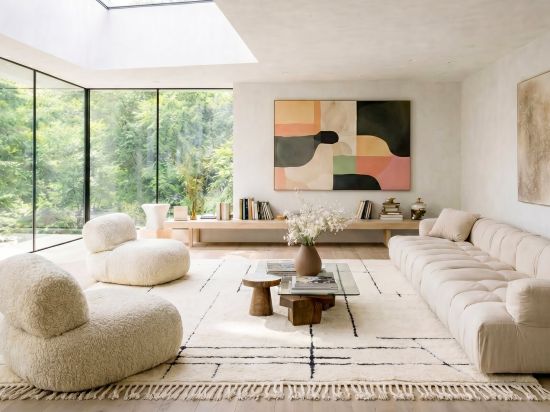
Detail of a classic oriental rug in the living room

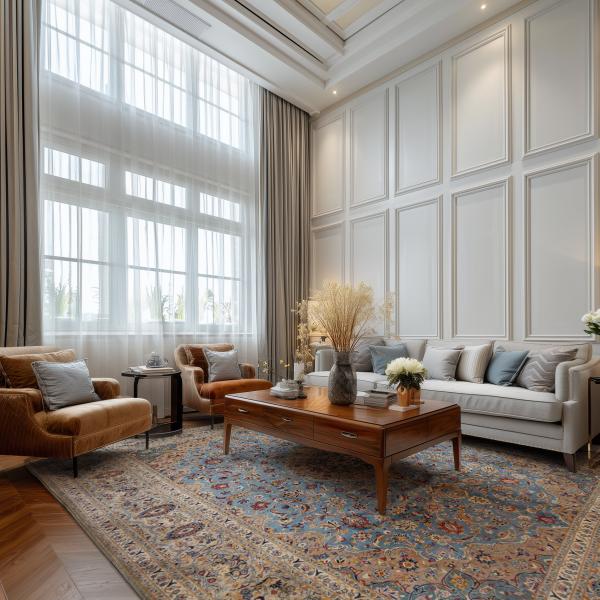
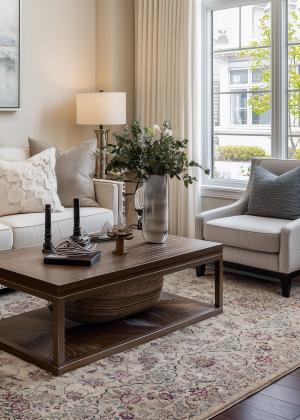
Bright Persian rug with floral medallion pattern in the living room with sofa and wooden table in na

5. Light as a Design Element

Natural light plays a central role. Open windows, light curtains, and candles in the evening create an atmosphere of warmth and clarity – perfectly in line with the arrival of spring.

Inspiration Editor:
Laura Acero
published on February 26, 2026